


Kroger promised to end cages.
She’s still waiting…
Behind Kroger’s eggs are hens confined in cages—one of the cruelest forms of animal abuse.
Kroger promised to end the use of cages for hens by 2025. But that promise has expired. Today, Kroger still profits from caged eggs while hens agonize in the same tiny cages, year after year. Kroger can change this… and you have the power to make it happen.
Tell Kroger that animal cruelty is unacceptable
Help hold Kroger accountable for their failed cage-free commitment! Take a minute to send this email to Kroger and let them know the world is watching. Every message adds pressure and shows that guests, fans, and members expect fair play — not animal cruelty.
Please check that all required fields are filled out and try again.


Kroger sells eggs from hens in extreme confinement
Rows of cages. Wire on every side. Hens packed shoulder to shoulder. They cannot nest, perch, dust-bathe, set foot on the ground, or ever spread their wings.
They suffer broken bones, open wounds, and lose their feathers from the permanent and extreme confinement in cages made of wire. This is extremely cruel, and Kroger is responsible.
Kroger’s rotten egg promises
Kroger committed to eliminating cages for hens by 2025. The deadline came and went. The hens are still in cages, and they are suffering.
• States across the U.S. are banning the confinement of animals in cages.
• From the EU to the UK to New Zealand, countries are phasing out cages for hens.
• Companies like McDonald’s have already eliminated the confinement of hens in cages. And other major grocers—like Target and Ahold Delhaize—have comprehensive plans to eliminate cages.
Meanwhile, Kroger is falling behind. Instead of accountability and leadership, Kroger offers excuses.
Instead of keeping its promise, Kroger betrays its customers and the animals.

Images are representative of farms that use cages.
FAQ’s
Why is Animal Equality campaigning against Kroger?
+In 2016, Kroger publicly committed to sourcing 100% of its eggs from cage-free hens by 2025. After years of making that promise, Kroger abandoned its original commitment in 2022, replacing it with a significantly less ambitious goal: sourcing approximately 70% of its eggs from cage-free or other higher-welfare systems by 2030.
This decision means millions of hens will continue to suffer in cramped, restrictive cages despite Kroger’s original promise to eliminate them.
Animal Equality is calling on Kroger to take responsibility for its commitment, establish a credible plan to eliminate cages from its egg supply chain, and meet with us to discuss a path forward.
What did Kroger promise about cage-free eggs?
+In 2016, Kroger pledged to source 100% of its eggs from cage-free hens by 2025. This commitment represented an important step toward improving the lives of millions of animals.
However, in 2022, Kroger abandoned its original commitment and replaced it with a goal of sourcing approximately 70% of its eggs from cage-free or other higher-welfare systems by 2030.
This was a significant retreat from the promise Kroger made to consumers. Rather than following through on its commitment, the company gave itself five additional years while allowing millions of hens to remain confined in cages.
Why can’t Kroger afford to fulfill its original cage-free commitment?
+Kroger has cited costs and customer affordability as reasons for abandoning its original cage-free commitment. But affordability and animal welfare should not be treated as mutually exclusive priorities.
Kroger is one of the largest grocery retailers in the United States, with significant purchasing power and influence over its suppliers. The company had nine years between its original 2016 commitment and its 2025 deadline to prepare for this transition.
Rather than abandoning its promise, Kroger should work with its suppliers to find solutions that protect hens while taking customer affordability into consideration.
Is there enough cage-free egg supply to meet Kroger’s original commitment?
+Supply-chain challenges are a legitimate consideration, but they are not a reason to abandon a public commitment and leave suffering animals behind.
The egg industry has been transitioning toward cage-free production, and a substantial portion of the nation’s laying hens are already housed in cage-free systems. This demonstrates that large-scale transitions are possible.
As one of the country’s largest grocery retailers, Kroger has considerable influence over its suppliers and the ability to help drive further investment in cage-free production.
After making its commitment in 2016, Kroger had years to work with suppliers and prepare for its 2025 deadline. The company should be developing a credible plan to fulfill its promise rather than using supply challenges to justify abandoning it.
How many hens are affected by Kroger’s egg sourcing policies?
+Kroger’s egg sourcing policies affect millions of hens every year. Animal Equality estimates that Kroger’s decisions impact as many as 12 million hens annually.
For each of these animals, the difference between being confined in a cage and having the freedom to move around a cage-free environment is significant.
By abandoning its original commitment, Kroger has prolonged the suffering of millions of hens who were supposed to be protected by its 2025 deadline.
What is Animal Equality asking Kroger to do?
+Animal Equality is asking Kroger to honor its original 2016 commitment to source 100% cage-free eggs and take meaningful steps toward eliminating cages from its egg supply chain.
We are also asking Kroger’s leadership to meet with Animal Equality to discuss a credible plan forward that protects hens and addresses the company’s concerns.
Kroger made a public promise in 2016. It had nearly a decade to prepare for its deadline. Now, rather than taking responsibility for abandoning that commitment, the company continues to leave millions of hens in cages.
We are asking Kroger to find a way forward that protects hens, considers customers, and delivers on the promise it made.
Who can I contact for more information or media inquiries?
+Have additional questions about Kroger’s cage-free commitment or Animal Equality’s campaign? We’d love to hear from you. Please reach out to our team at [email protected] and we’ll be happy to help.
Media inquiries: Members of the media interested in learning more about the campaign, speaking with Animal Equality representatives, or arranging an interview are encouraged to contact:
Claire Roberson
Communications Manager
[email protected]
(424) 902-2122
Animal Equality is available for interviews and welcomes opportunities to discuss Kroger’s abandoned commitment, the impact on hens, and our efforts to secure a meaningful resolution.
News
-
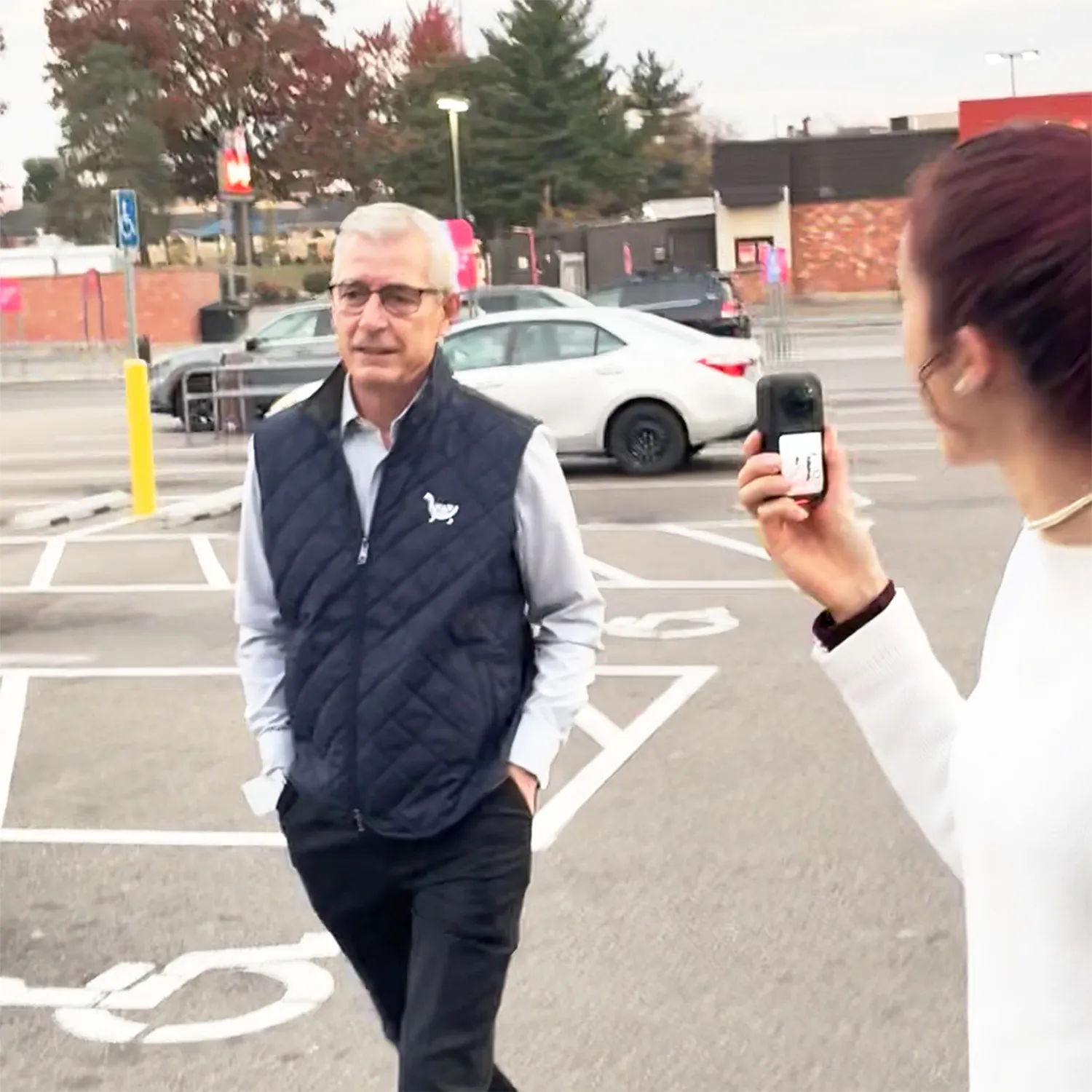
Kroger’s CEO Greg Foran confronted by Animal Equality advocates over abuse of hens
Animal Equality advocates challenge Kroger’s CEO Greg Foran over the company’s broken promise to eliminate cages for hens.
-

Animal Equality activists win Cincinnati court battle against restrictions on Kroger protests
Kroger openly supported the City’s efforts to restrict demonstrations on public sidewalks, but defense counsel successfully asserted protesters’ First Amendment rights.
-
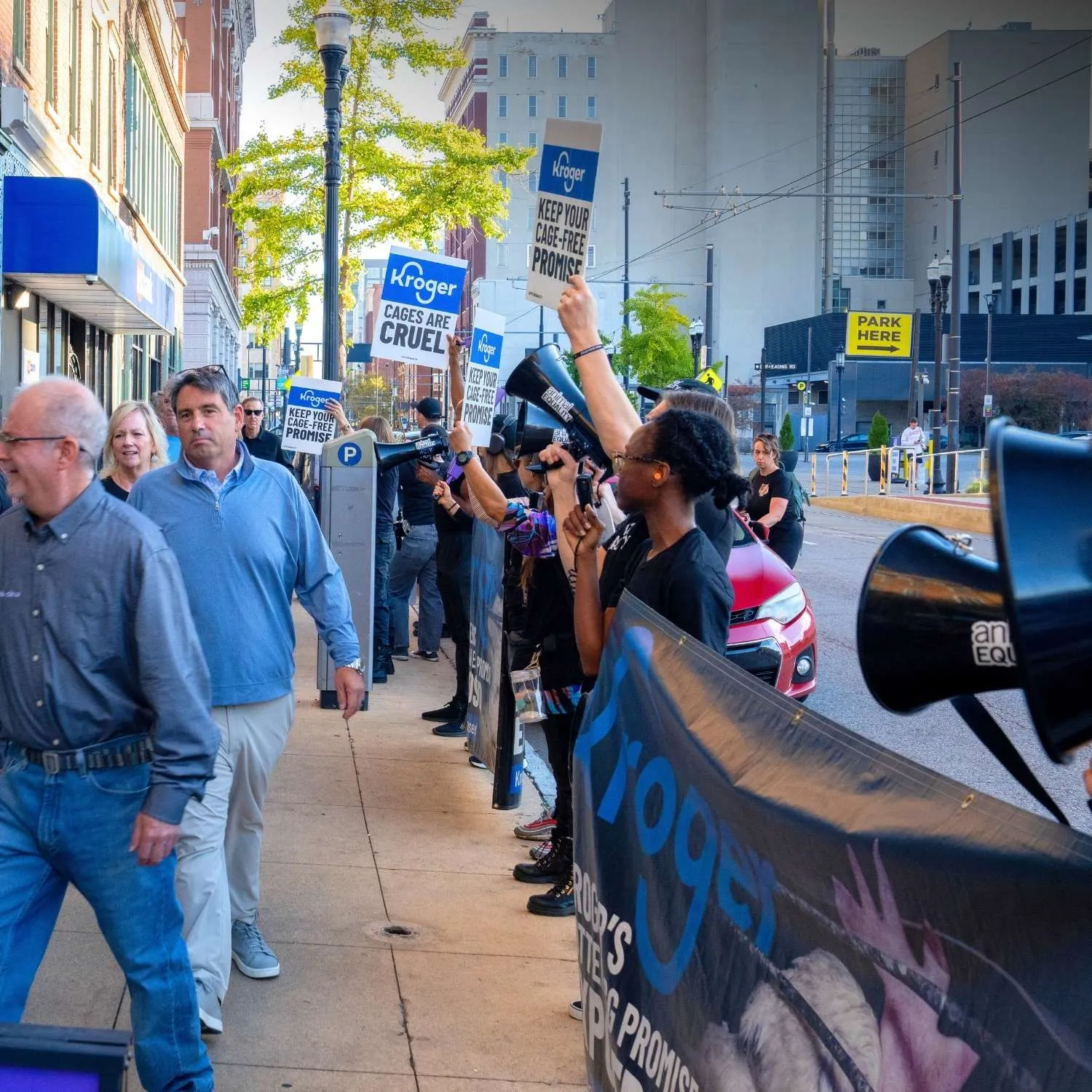
Animal Equality disrupts Kroger-sponsored conference in Cincinnati
Animal Equality disrupted the opening reception of a Kroger-sponsored conference in Cincinnati and confronted a senior Kroger director who declined to respond to questions about the company’s broken cage-free commitment.
Actions
-
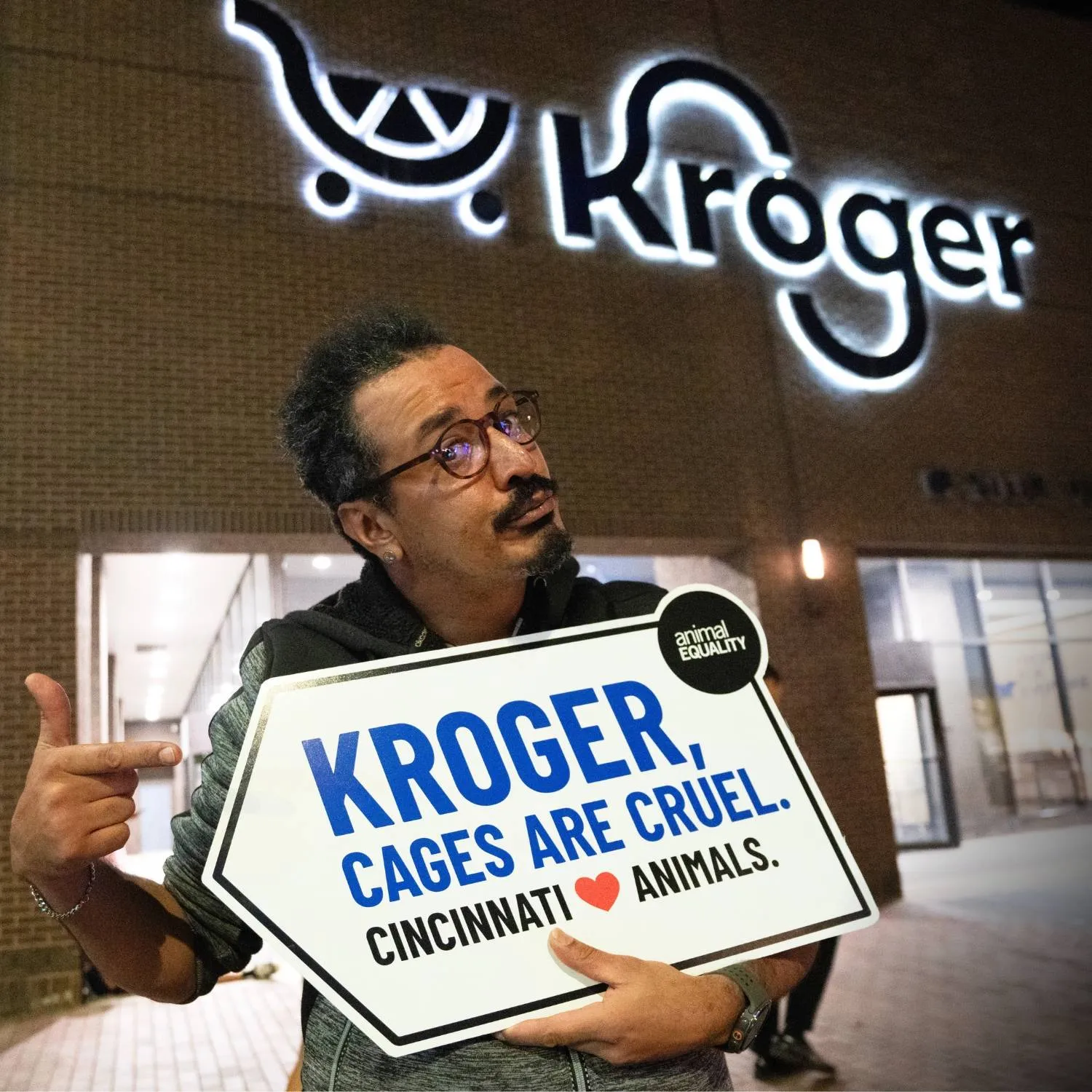
Kroger: Don’t Leave Hens Behind
Kroger shouldn’t get to talk about building a better food system while ignoring the animals who are paying the price for its decisions.
-
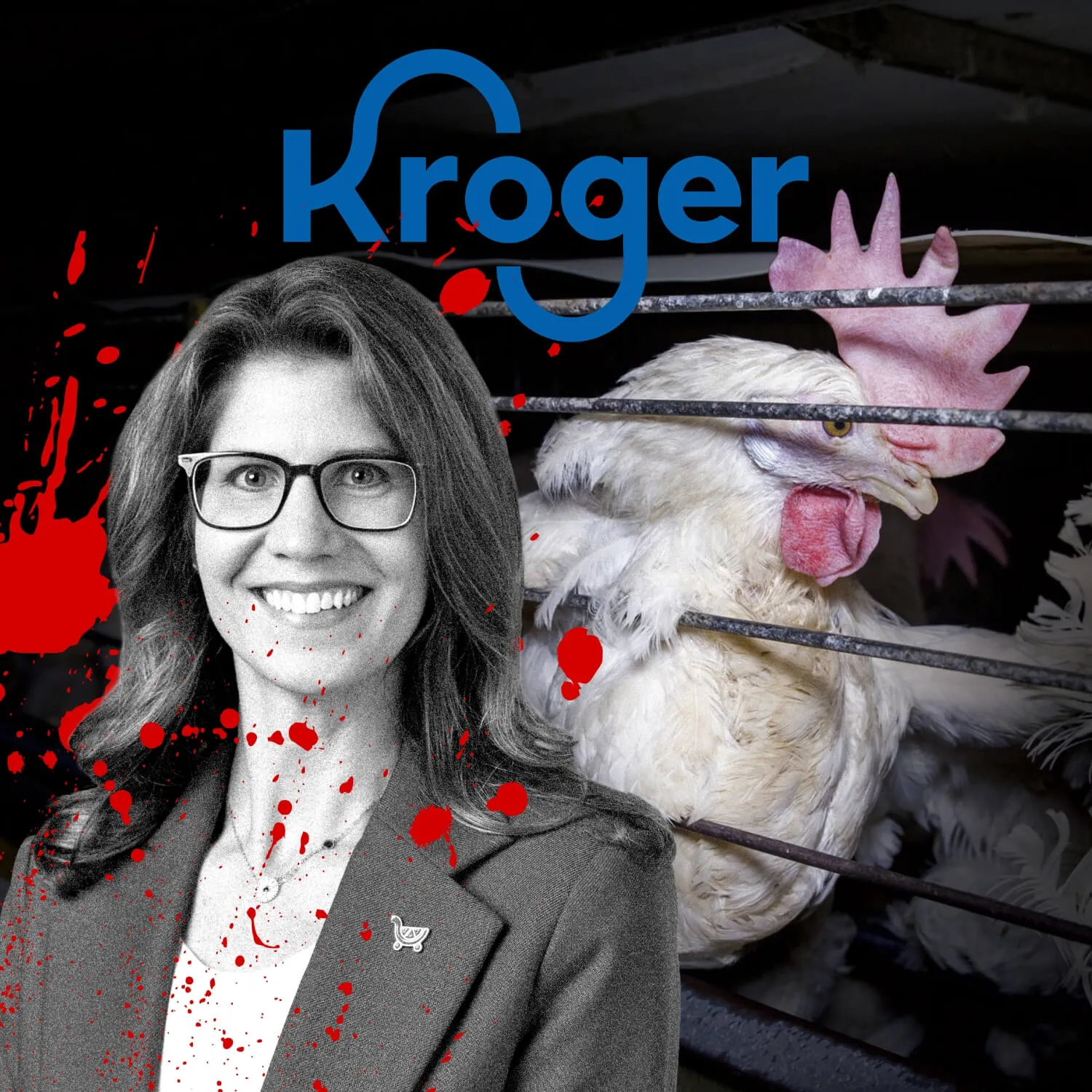
Emilee De Martino: Condemn Kroger’s lies
Kroger’s Chief People Officer Emilee De Martino has said that she prides herself on accountability, yet she exhibits none amidst Kroger’s controversies.
-
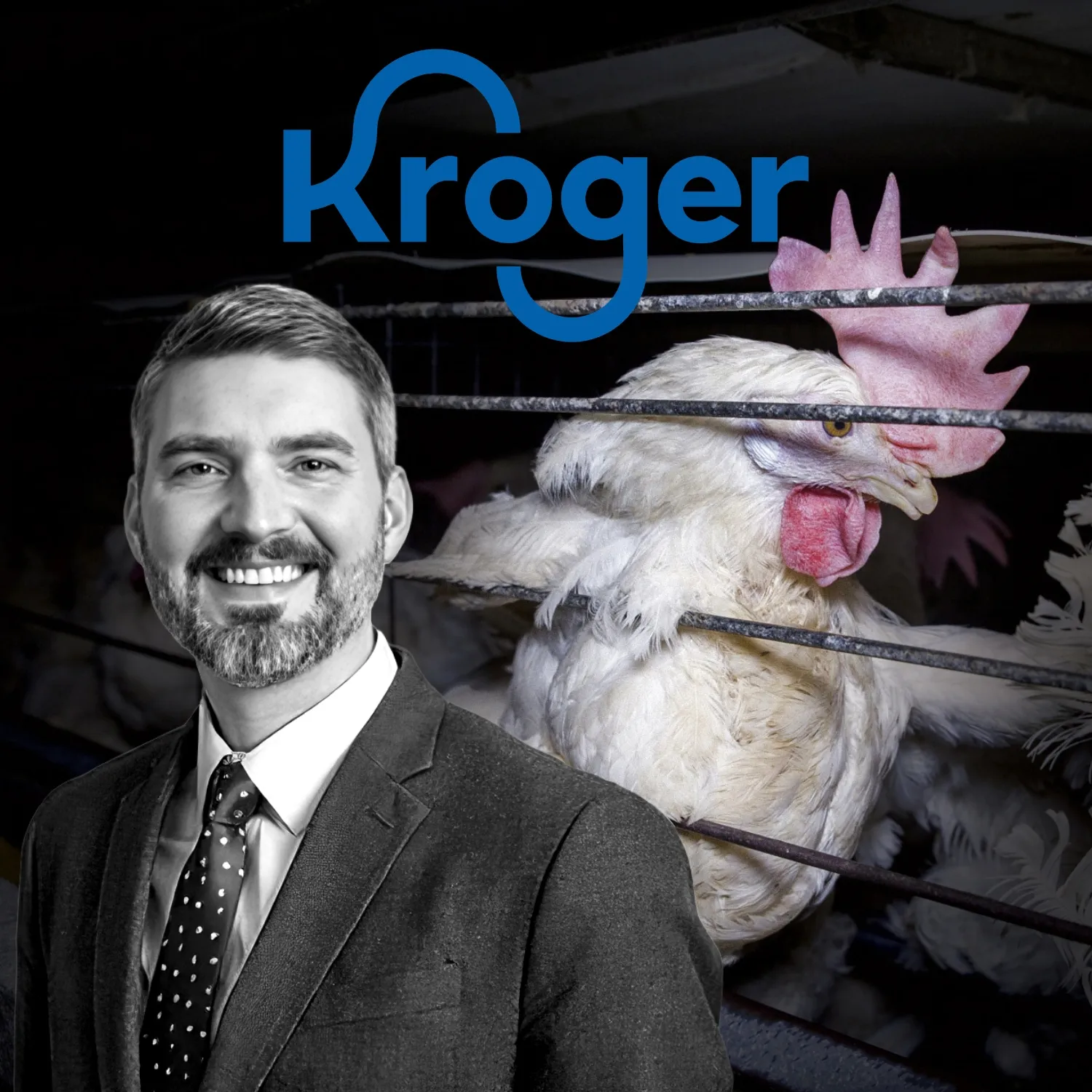
Kroger’s reputation is on Keith’s watch
Keith Dailey helps shape how Kroger presents itself as a socially responsible company, but its broken cage-free commitment tells a different story. Urge him to use his position to push Kroger toward a resolution that protects hens and honors its promise.