Mexico approves first national law to protect all animals, including farmed animals
Mexico’s Chamber of Deputies approved the General Law on Animal Welfare, Care, and Protection on Wednesday, November 18, by a vote of 470 to 0, with 2 abstentions. The law now heads to Mexico’s executive branch to be officially enacted.
Wednesday’s vote answers a mandate set in 2024, when Mexico amended its constitution to ban animal cruelty and directed Congress to pass a national law defining how animals must be protected.
Today Mexico takes a historic step: for the first time, a national law recognizes that animals feel and obligates the State to protect them. This is the result of years of work by civil society and millions of people who demanded it.” — Dulce Ramírez, Vice President of Animal Equality, Latin America
Once the law takes effect, each state must update its own laws to match. Officials will also need to create and revise national standards and policies so these protections can be enforced at every level of government.
What does Mexico’s new animal protection law change?
All animals
- The law recognizes animals as sentient beings, meaning they can experience feelings and sensations, such as pain and pleasure.
- Animals, including farmed animals, must be provided with adequate food, water, and regular veterinary care.
- Animals must have housing that allows them to move freely and accounts for their social needs, along with physical, social, and mental stimulation.
Farmed animals
- The law bans transporting animals in overcrowded conditions, without ventilation, or without protection from the weather. Changes to the Federal Animal Health Law also require transport to minimize stress, suffering, and risk during loading, transit, and unloading.
- Animal health standards must be designed so farmed animals can engage in natural behaviors.
- Slaughter must be carried out by trained personnel.
The new national law also bans abandoning companion animals, performing cosmetic mutilations, and using live animals as prizes or in promotions. It prioritizes alternatives to using animals in research, limits the hours animals can be used for labor, and holds people who abuse animals responsible for the cost of their medical care.
Years of advocacy behind Mexico’s animal protection law
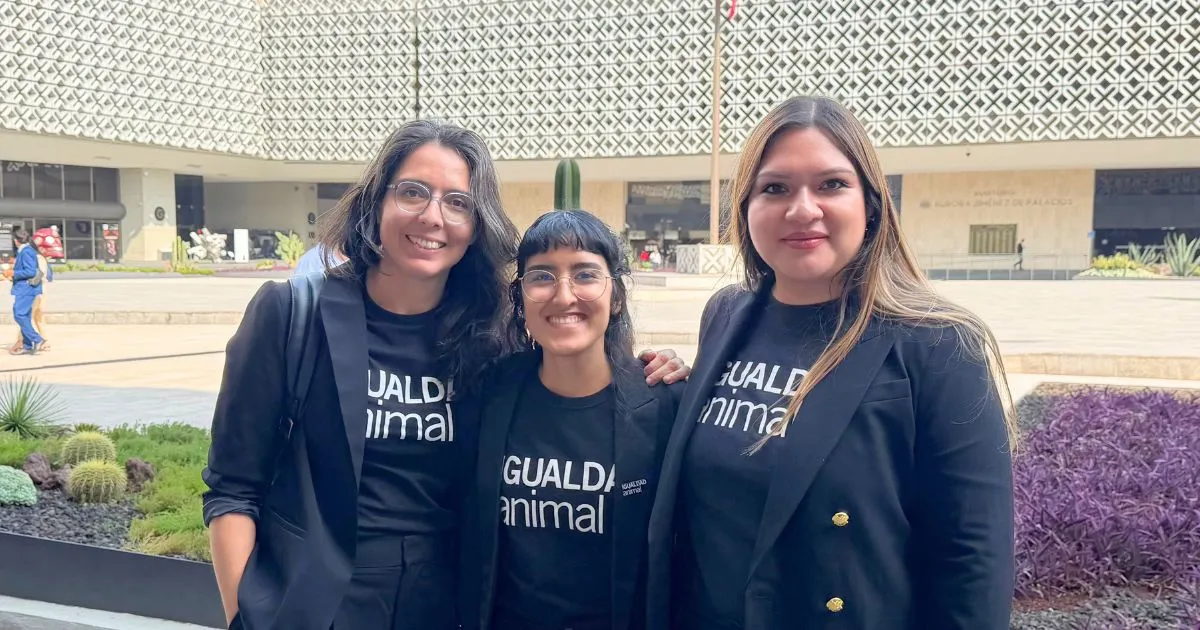
Organizations, specialists, and activists spent years pushing for a national law to protect animals in Mexico. Through forums and working groups, they played a key role in drafting the law and pressed lawmakers to keep the process moving.
Animal Equality was part of that effort, gathering more than 213,000 signatures in support of the legislation. The organization will keep working to strengthen legal protections for animals across Mexico.
Save Animals from Abuse
Pigs, cows, and other animals feel pain and deserve to be protected from abuse.
You can protect these intelligent animals by simply choosing plant‑based alternatives.