

Fast-growing chickens collapse under their own weight on Argentina farms

Key takeaways
- 1 Footage obtained by Animal Equality documents chickens unable to walk or reach water, severe skin lesions, and carcasses left among living birds.
- 2 Chickens bred for rapid growth swell from 1.5 ounces to over 7 pounds in 42 days, causing severe bone deformities and cardiovascular problems.
- 3 Animal Equality has filed a formal complaint with Argentina’s agri-food health authority, demanding an inspection of the birds’ condition.
A new Animal Equality investigation documents conditions inside three chicken farms in Argentina’s Buenos Aires and Entre Ríos provinces.
What investigators found inside Argentina’s chicken farms
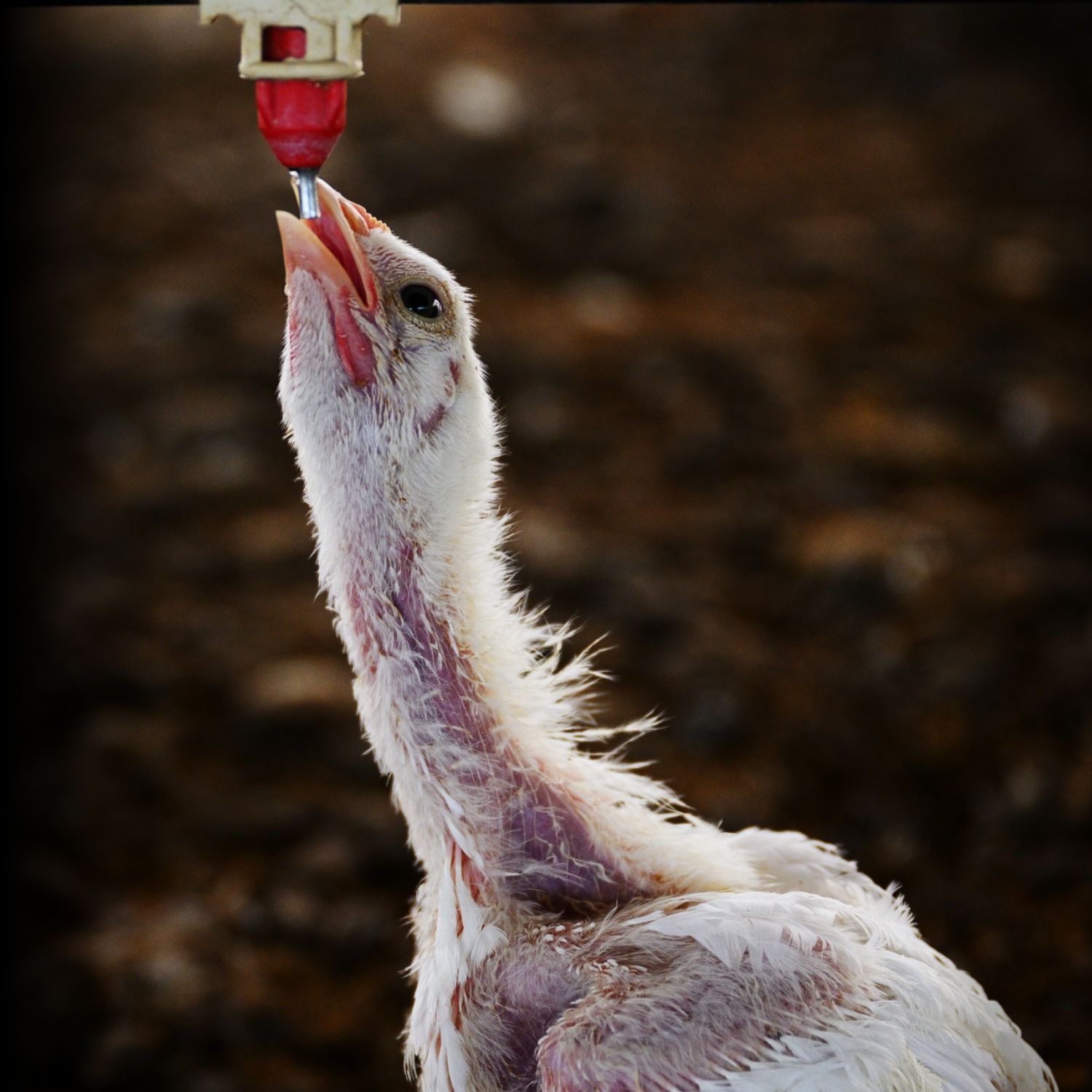
Investigators documented chickens collapsing under their own weight, their bodies too heavy to push themselves up to reach the water lines. Smaller birds, having not grown as quickly, were too small to reach them at all.
Corpses were found next to water and feed stations and among live animals, raising the risk of disease and infection inside the sheds.
Feather loss, burns, and skin lesions were also documented on birds lying in constant contact with urine and waste.
What are the effects of rapid growth on chickens?
The industry breeds chickens to grow as fast and as large as possible to maximize profit. At just 42 days old, the average age at slaughter, chickens weigh more than 70 times their birth weight.
Researchers confirm that rapid weight gain and abnormal skeletal development cause disease in the leg bones of chickens, including muscle weakness, joint cysts, and arthritis that can lead to lameness or paralysis.
Animal Equality challenges Argentina’s inspection findings
Following the investigation, Animal Equality filed a formal complaint with Argentina’s National Agri-Food Health and Quality Service (SENASA), demanding a full investigation into the conditions documented at each farm.
SENASA responded by sending a local veterinarian to one farm in Entre Ríos, concluding that conditions were acceptable.
After reviewing SENASA’s own records, reports, and photographs from the inspection, Animal Equality identified serious gaps in the process:
- Inspectors did not assess the physical condition of the chickens.
- Inspectors did not evaluate conditions inside the sheds.
- No photographs of the animals were taken.
SENASA’s inspections focus on whether farm infrastructure meets their criteria, but they fail to assess the condition of the chickens inside. That is precisely what this investigation exposes,” Dulce Ramírez, Vice President for Latin America at Animal Equality
This investigation comes as Argentina’s animal agriculture industry draws growing international attention. The country’s beef exports to the U.S. have tripled in the first seven months of 2026. But cattle are only part of Argentina’s animal agriculture industry. In 2025 alone, more than 750 million birds were slaughtered for human consumption. As intensive farming expands, this investigation shines a light on the animals behind those numbers.
Live kindly
With rich emotional lives and unbreakable family bonds, farmed animals deserve to be protected.
You can build a kinder world by replacing animal food products with plant‑based ones.