
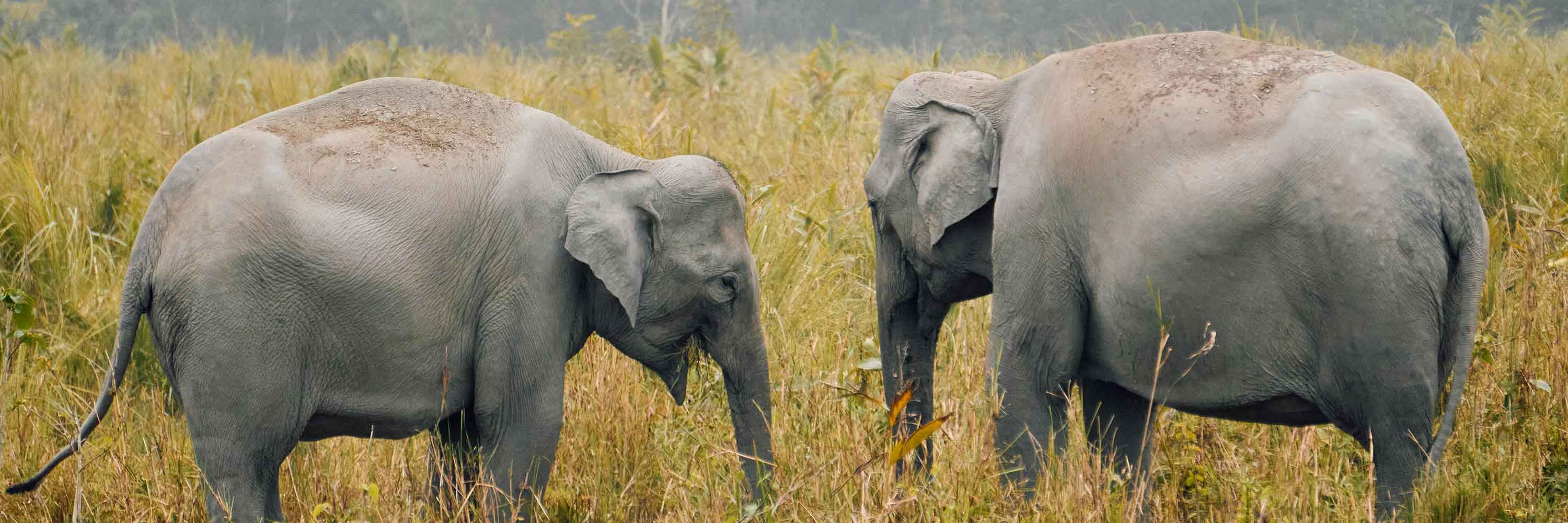
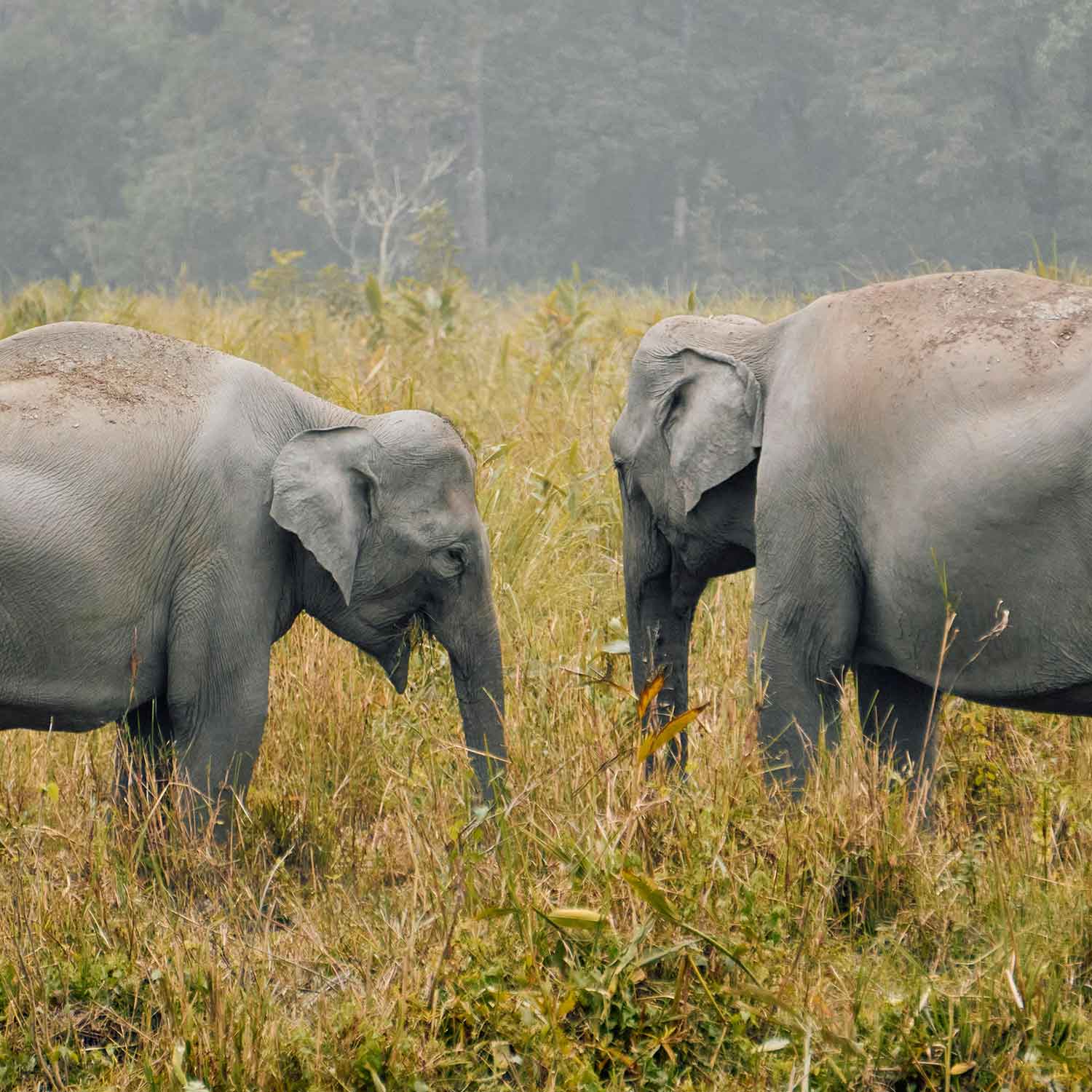
India moves to protect elephants from deadly train collisions
- Railway lines run through elephant habitats in parts of India, turning them into danger zones for animals.
- In a 2010 presentation, Animal Equality urged officials to develop radar-based sensors. This technology would detect elephants on or near the tracks.
- In 2012, Animal Equality filed a public records request to learn what actions the government had taken. At the time, officials said the technology would be ready for testing by 2016.
- The sensor device was later developed and tested in some regions of India.
- Since then, Indian Railways has introduced AI-based detection—an updated version of the same concept.
- This work is part of a growing movement in India to protect all animals, from elephants to cows, pigs, and chickens.
Update December 2022 – While elephant deaths continue, earlier technology concepts have evolved into an AI detection system in use by Indian Railways.
Update January 2014 – Animal Equality met with officials to check the status of the sensor device project and share further recommendations.
In parts of India—especially forest regions in Northwest Bengal—railway tracks cut through elephant habitat. Elephants cross these tracks as they move between forests to find food and water.
When a train comes through, there is little time to react. One collision can kill several elephants at once.
In 2010, Animal Equality sent a presentation to the Ministry of Environment and Forests with practical steps to prevent elephant deaths. These ideas were forwarded to the Ministry of Railways for review.
Government records show what happened next… and why progress for elephants is already underway.
Why do railways put elephants at risk?
Elephants often cross train tracks slowly and in groups. Some walk along the rails because they feel like a clear, open path. If a herd feels stressed or confused, it may stop altogether.
Trains need a long distance to slow down. Even when a conductor spots elephants ahead, stopping can take hundreds of yards.
Curved tracks, trees, darkness, fog, rain, and uneven ground often block visibility. By the time elephants are spotted, it may be too late.
What did the records show?
In 2010, Animal Equality wrote to India’s government with a clear proposal: radar sensors to detect animals near the tracks, plus automatic braking to avoid collisions.
The letter was forwarded to the Ministry of Railways for review. By 2011, rail officials announced a project to develop a “Wild Animal Protection System.”
This year, Animal Equality filed a public records request to track what happened next.
The Indian Institute of Technology said it has developed a device that can detect elephants on train tracks. If it detects an elephant, the system is meant to alert the station master, who can then warn approaching trains to slow down or stop.
Officials said the technology will be ready for testing by 2016.
Elephants… and farmed animals, too
India’s work for elephants is part of a deeper cultural heritage. The principle of Ahimsa, or respect for all living beings, has shaped Indian life for thousands of years.
That respect extends to animals raised for food.
India has a long tradition of respect for animals. Whether an elephant, cow, or chicken, every animal deserves compassion. — Amruta Ubale, Executive Director of Animal Equality in India
Just as advocacy pushed officials to protect elephants, similar campaigns have strengthened protections for cows, hens, and chickens.
Several of those breakthroughs began with Animal Equality’s investigations into factory farms and slaughterhouses.
View the full library to learn the truth about factory farming.
A daily way to live Ahimsa
Ahimsa is a principle which can be reflected in our daily choices.
Wholesome meals built with plant proteins are already common across India.
Want ideas you can use this week? Love Veg shares recipes from many cuisines, including Indian-inspired dishes.
Live kindly
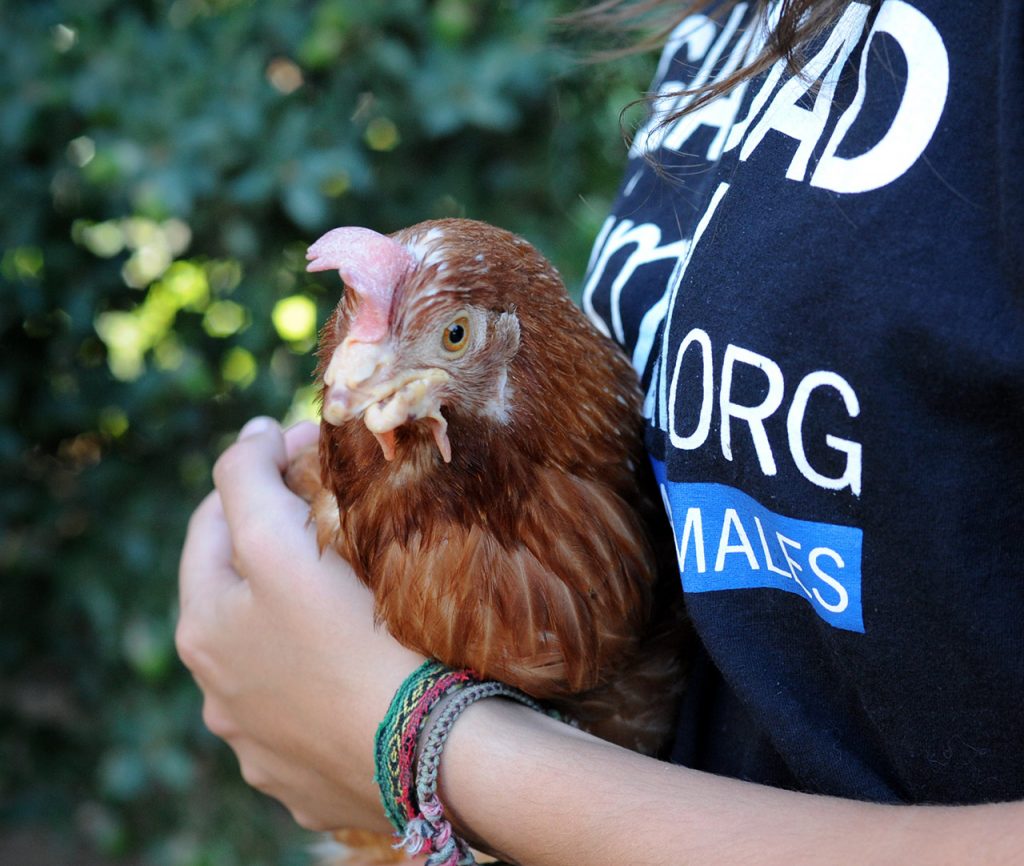
With rich emotional lives and unbreakable family bonds, farmed animals deserve to be protected.
You can build a kinder world by replacing animal food products with plant‑based ones.