
Inside foie gras farms, and the policy shockwave that followed
- Footage by Animal Equality has exposed force-feeding on foie gras farms in France and Spain.
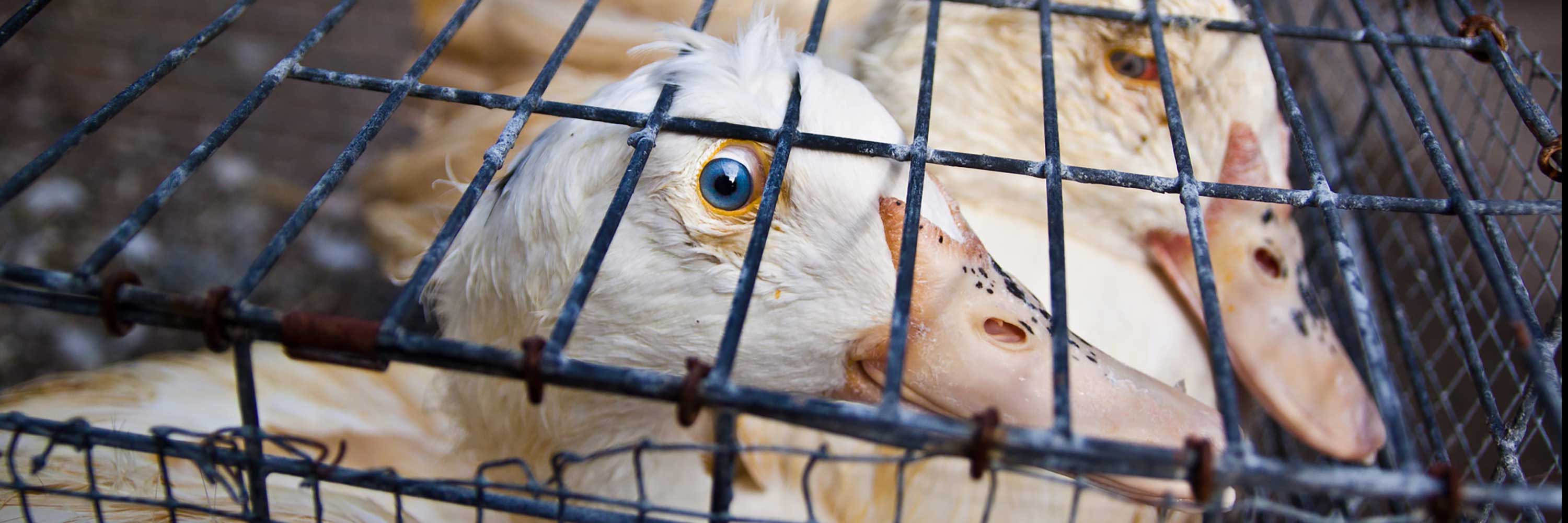
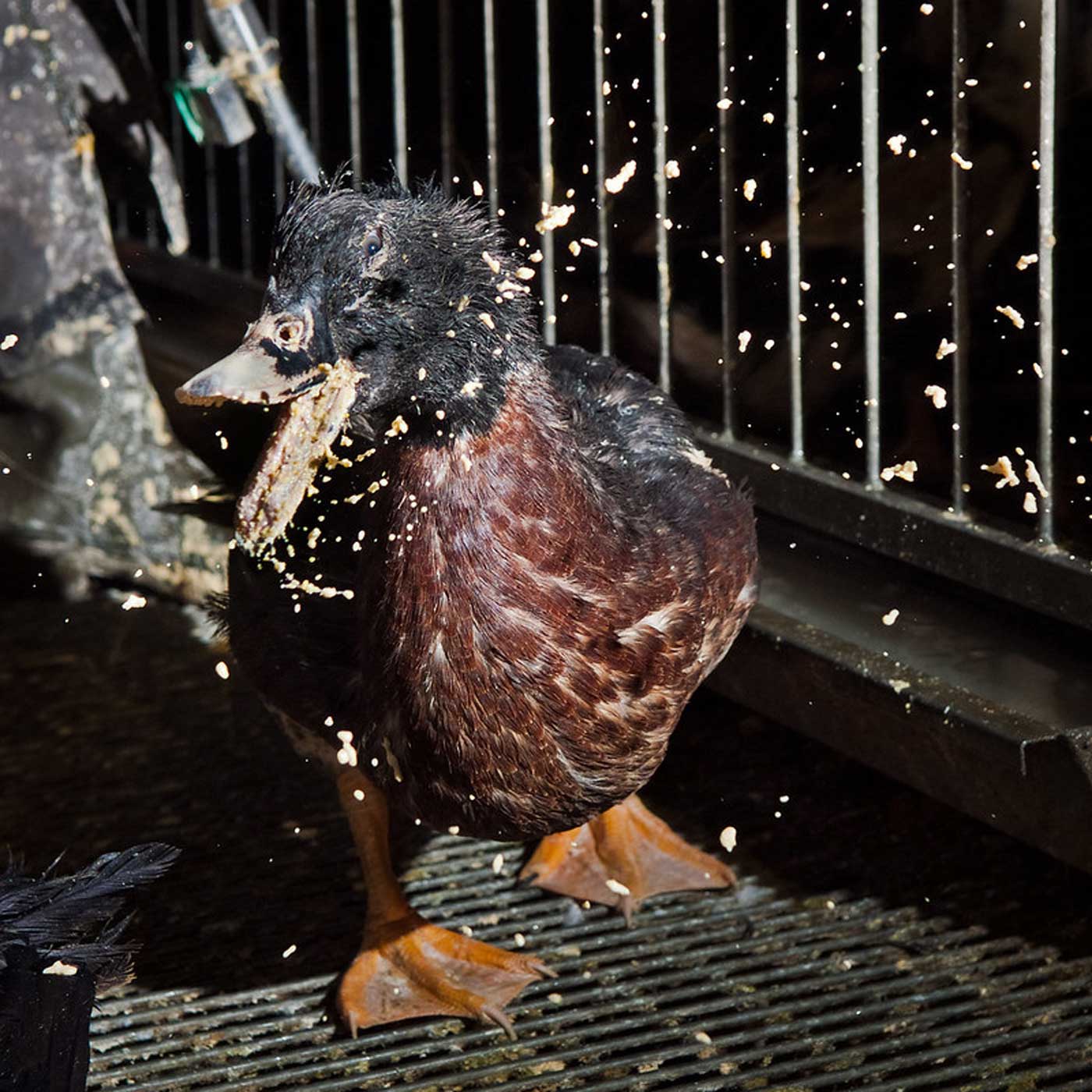
- Findings included birds with broken beaks, covered in blood, and left dead in their cages.
- Several of these farms were traced to major retailers and a world-renowned restaurant.
- Global backlash followed, including a decision by Italy’s COOP supermarket chain to stop selling foie gras.
- India later announced a nationwide ban on foie gras imports, citing violations of animal cruelty laws.
November 2018 – Actor Peter Egan and TV veterinarian Emma Milne joined Animal Equality for a visit to a French foie gras farm.
July 2014 – Following Animal Equality’s investigation and advocacy, India became the first country in the world to ban foie gras imports.
December 2013 – After witnessing footage by Animal Equality and other groups, Danish restaurant chain Sticks’ n’ Sushi agreed to remove foie gras from its menus.
Animal Equality has released footage from foie gras farms in Europe, offering a rare look at an industry steeped in controversy.
Foie gras—French for “fatty liver”—is produced by force-feeding ducks and geese several times a day.
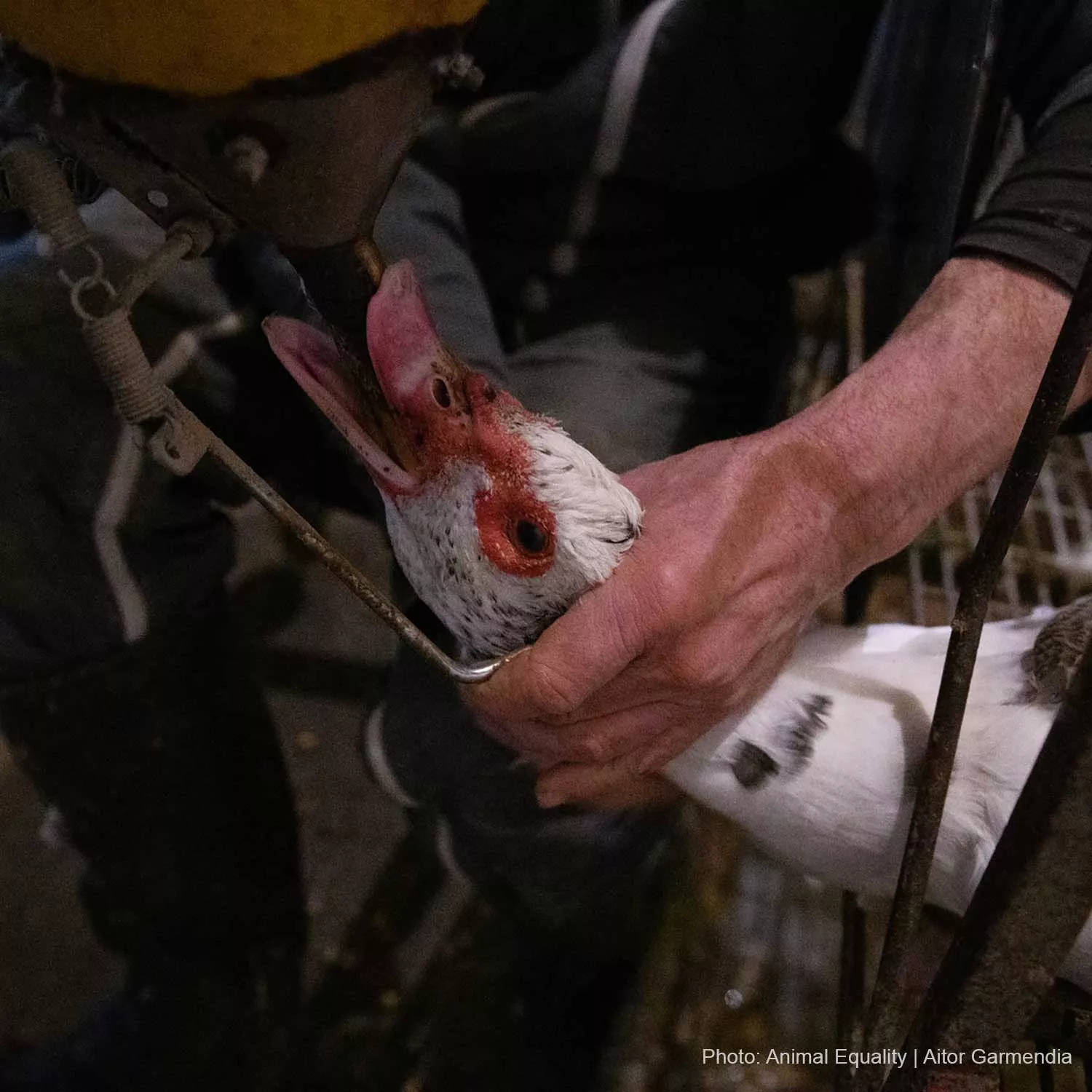
Workers force metal tubes down the birds’ throats, pumping in high-calorie feed to induce fatty liver disease. Their enlarged organs are sold as a pâté, often in high-end restaurants.
Step inside the farms
Across four farms in France, five in Catalunya, and one in Aragón, investigators found:
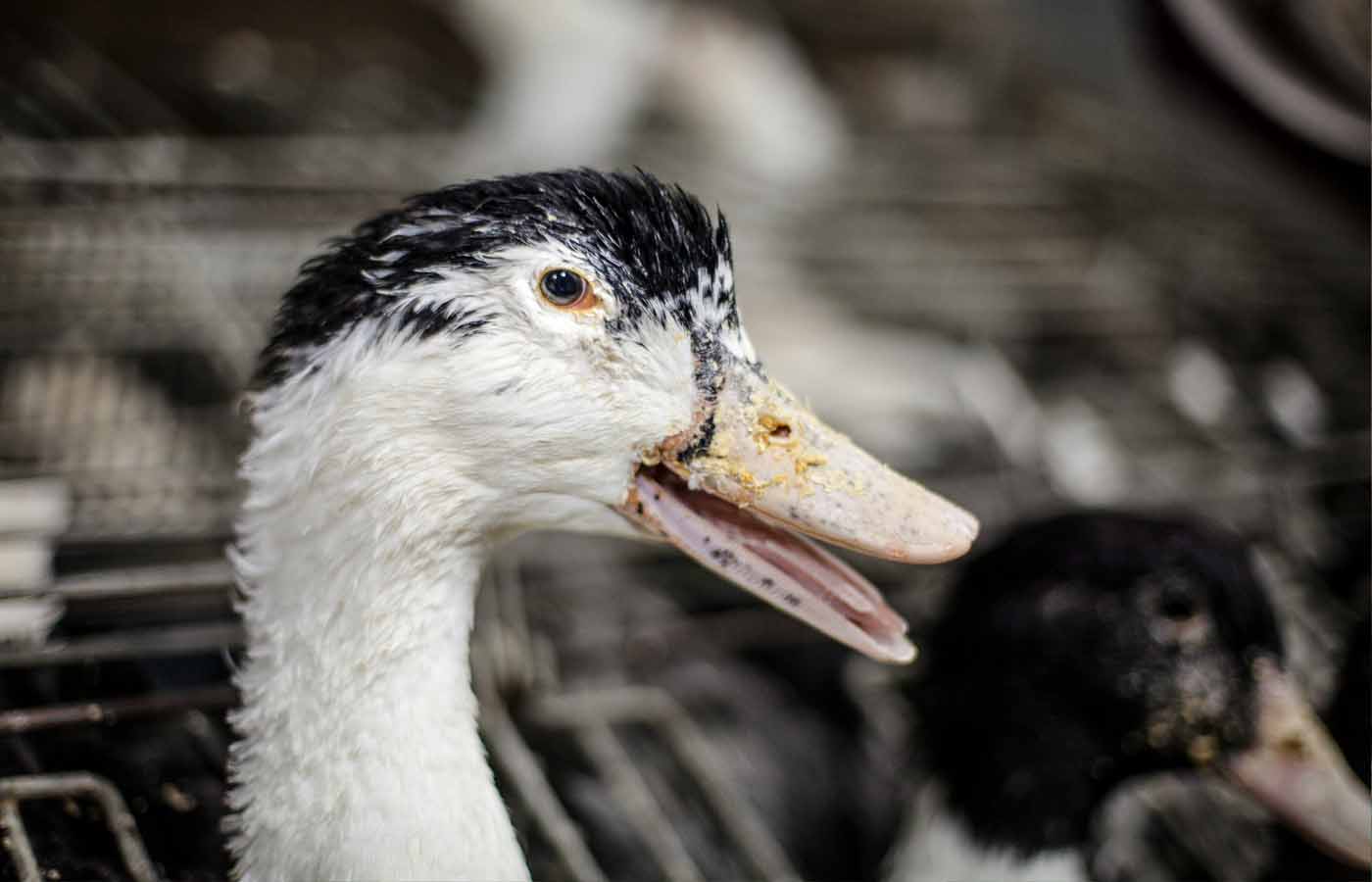
- Birds with broken beaks, their bodies smeared with blood
- Animals in narrow cages soiled with food and vomit
- Feeding tubes coated in blood, and birds with swollen, irritated throats
- Dead animals left in cages and on the floor
- Ducks panting rapidly while waiting for slaughter, backing into their cages with nowhere to escape
Workers handled the birds roughly, pushing tubes down their throats with apparent indifference. Many birds shrank back in their cages as workers approached to force-feed them.
Some had eye infections and open wounds, and many struggled to walk as their organs failed. With cages barely larger than their own bodies, many birds were unable to turn around or spread their wings.
Investigators also recorded repeated head shaking and nonstop feather-plucking—behaviors commonly linked to extreme stress.
Several of the farms called their methods “traditional,” a marketing term used to suggest higher welfare standards.
Who profits from cruelty?
At least one of the farms was linked to Mugaritz, the world-renowned Spanish restaurant led by chef Andoni Luis Aduriz.
Investigators also traced ties to Collverd and Martiko, two major Spanish foie gras producers that export worldwide.
The exports linked to these farms reached India, too.
Animal Equality submitted a report to the Indian government, arguing that foie gras violates the country’s animal cruelty laws. Citing statements from the United Nations and the European Union, the report called for a ban on foie gras imports.
Backlash across Europe
In July, officials opened a disciplinary case against Martiko, a foie gras producer linked to Mugaritz. Following the investigation, Animal Equality had filed charges against the company and one of its farm owners.
Months later, after the farm was shut down, Mugaritz was fined for using foie gras from illegal farms.
The fallout spread beyond Spain. After the footage was released, Italy’s supermarket giant COOP agreed to stop selling foie gras.
Soon after, eight Members of the European Parliament held a conference calling for a ban on foie gras production. Animal Equality’s findings were included in the discussions.
The consumers of this product have to know the agony these geese are forced [in]to… — Andrea Zanoni, Italian MEP
Is foie gras illegal in Europe?
Foie gras is produced in just five European Union countries: France, Spain, Hungary, Bulgaria, and Belgium.
In other EU countries—and in the United Kingdom—foie gras production is banned. However, many still allow it to be imported and sold.
Several high-profile celebrities have joined Animal Equality’s campaign to ban U.K. imports, including Peter Egan, Dev Patel, and Evanna Lynch.
Meanwhile, foie gras remains legal across most of the United States. Join Animal Equality’s call for a nationwide production and sales ban:
{firstname}, thank you for supporting this petition to end foie gras.
Support our investigations and campaigns to put an end to the cruelty of foie gras and factory farming:
Continue your impact for animals, {firstname}
Join a community of thousand of people getting active for animals.
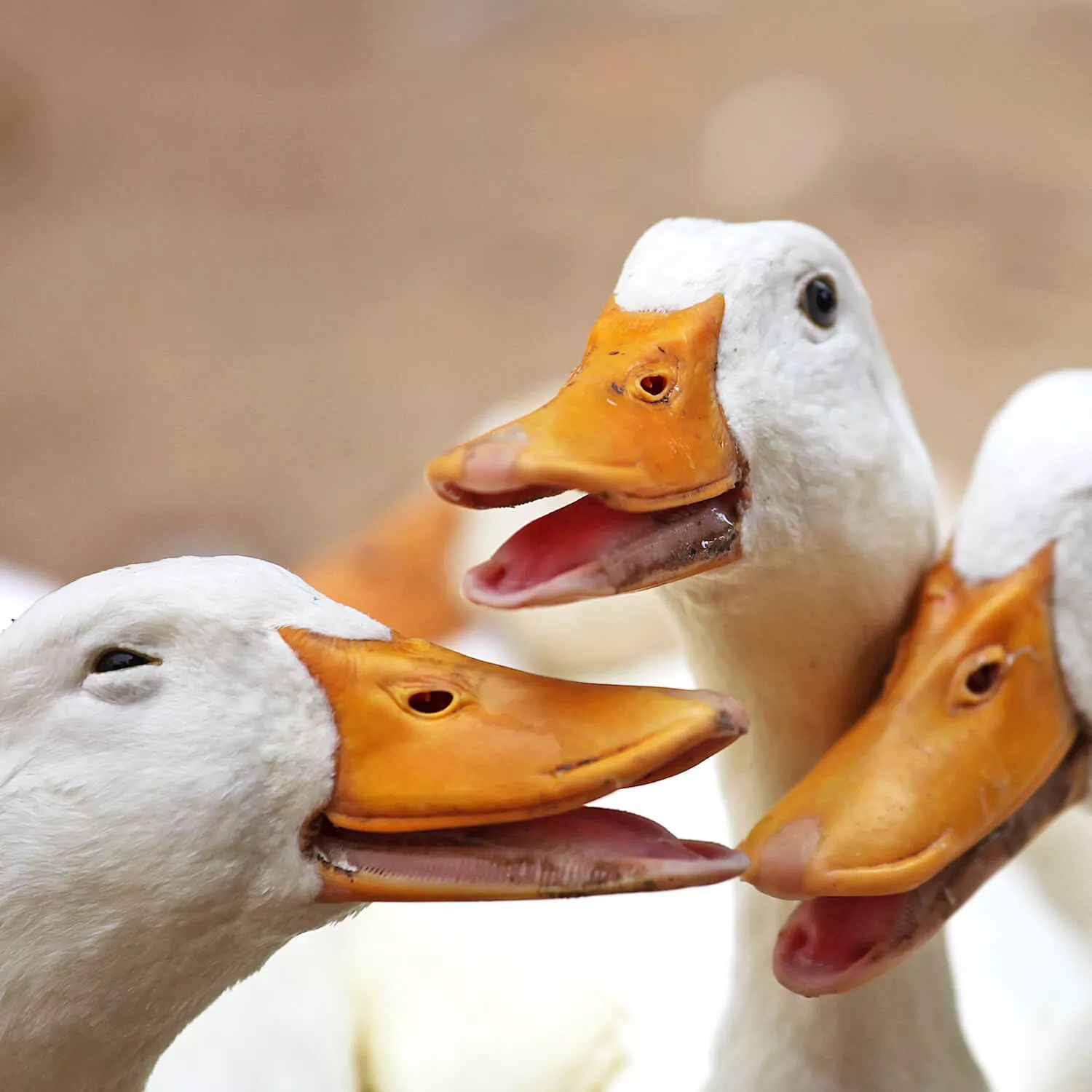
Do your loved ones know how foie gras is produced? Invite your friends to join you against the cruel treatment of animals.
Share this petition
Sign our petition calling for a ban on the sale and production of foie gras in the United States.
A new standard for fine dining
Foie gras is part of a larger system where other animals suffer, too. Join world-renowned chefs in putting more plants on the table, protecting cows, pigs, and chickens with every bite.
PROTECT DUCKS
Even before hatching from their eggs, ducklings communicate with their close‑knit families.
Protect these families by eating plant‑based and ditching animal products.