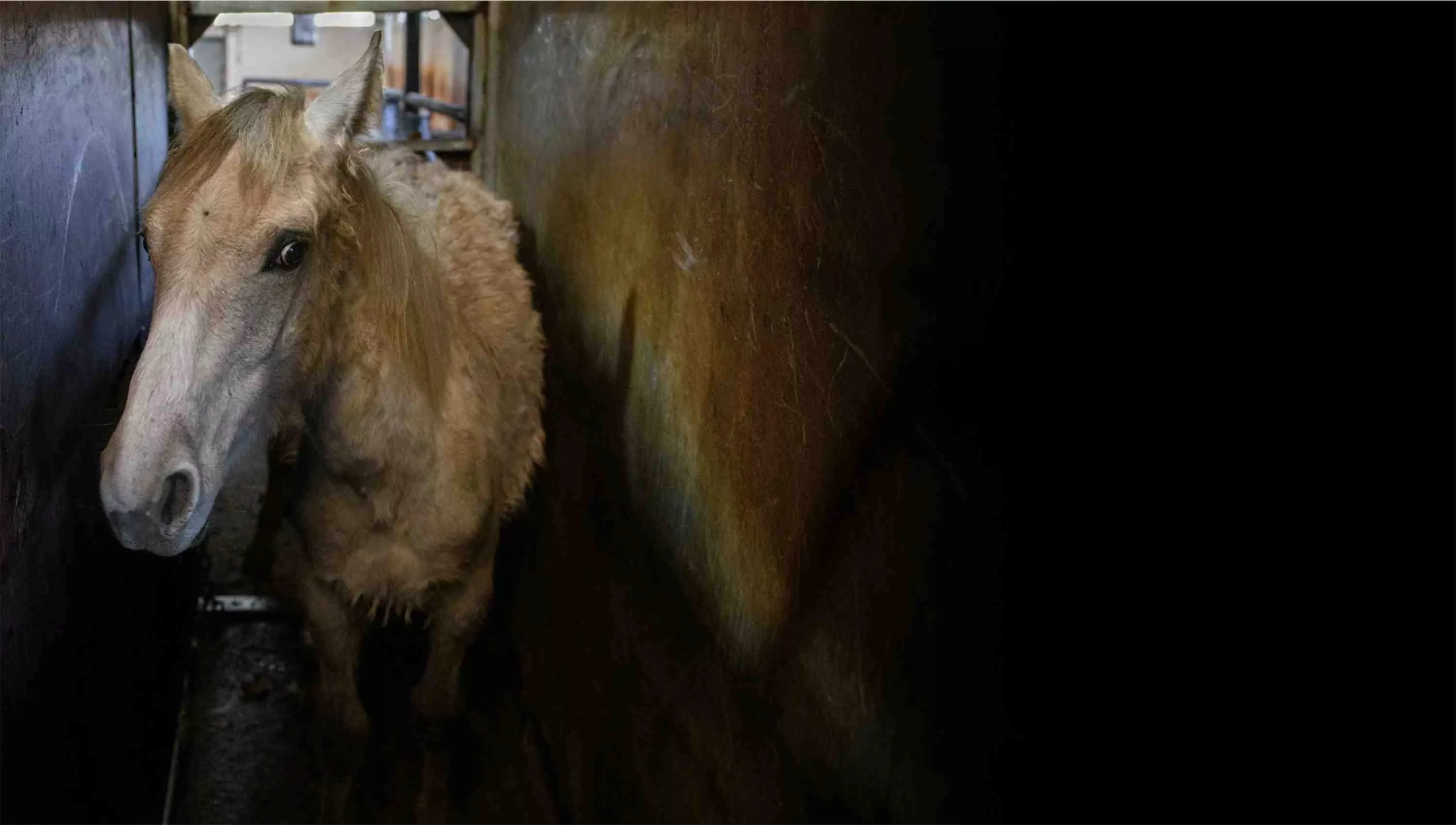
Help end horse slaughter
From Spain and Italy to Mexico and the U.S., Animal Equality has investigated this system for over a decade.
Horses raised in the United States are transported across borders and killed for their meat to be consumed abroad.
Our work to end horse slaughter
Four countries. More than a decade of investigations. One goal: end horse slaughter.
2026—United States
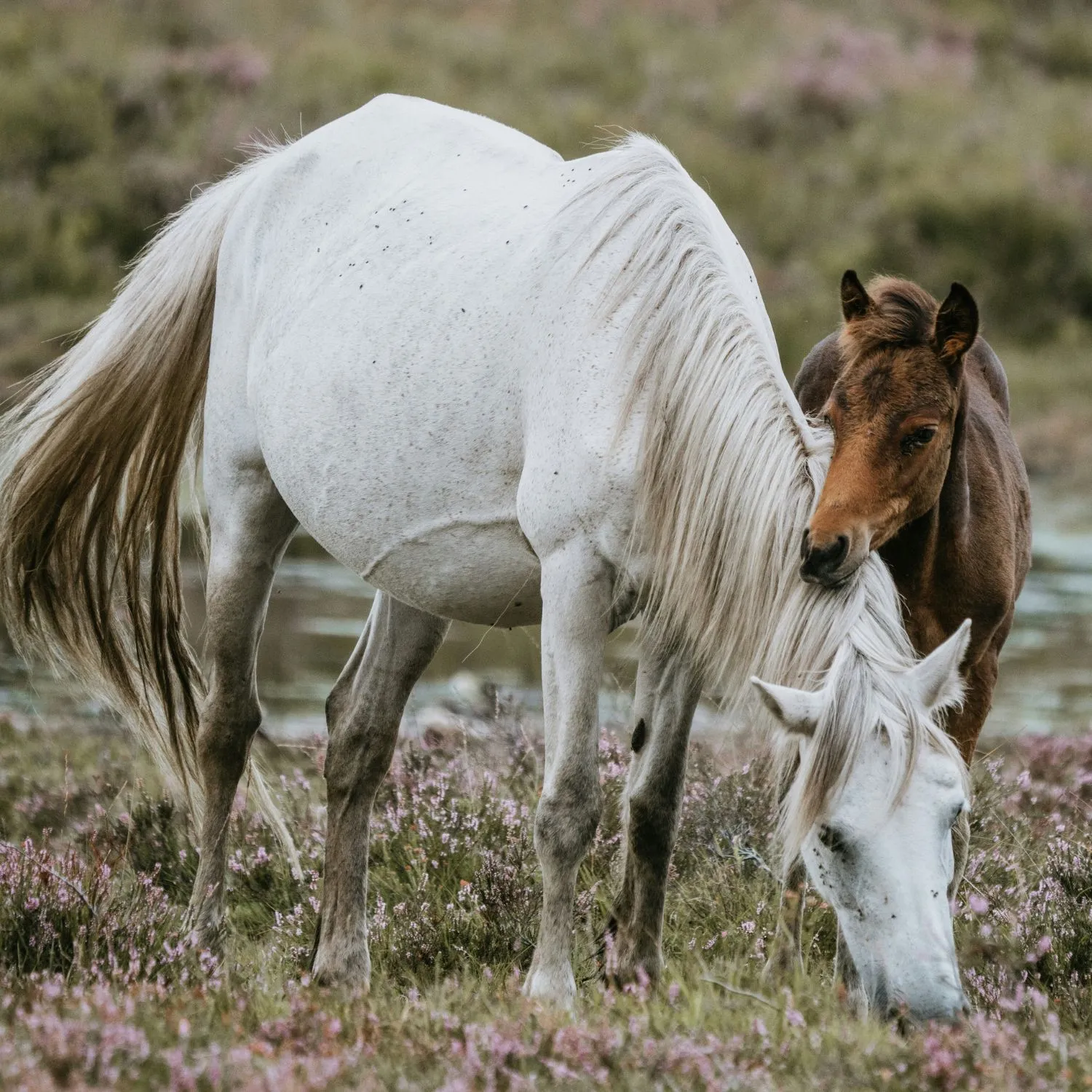
Animal Equality supports the passing of federal laws closing the critical loophole that allows thousands of horses to be transported and slaughtered abroad. Including backing the SAFE Act’s permanent ban on horse slaughter; and now the BUILD Act’s transportation prohibition.
2026—FROM INVESTIGATION TO LEGISLATION
After years of documenting cruelty, Animal Equality in Italy and the Islander Foundation launched a citizens’ initiative calling for a nationwide ban on slaughtering horses and equines. If 50,000 eligible Italian voters sign, Parliament must formally consider the proposal.
2025—BUILDING PUBLIC SUPPORT
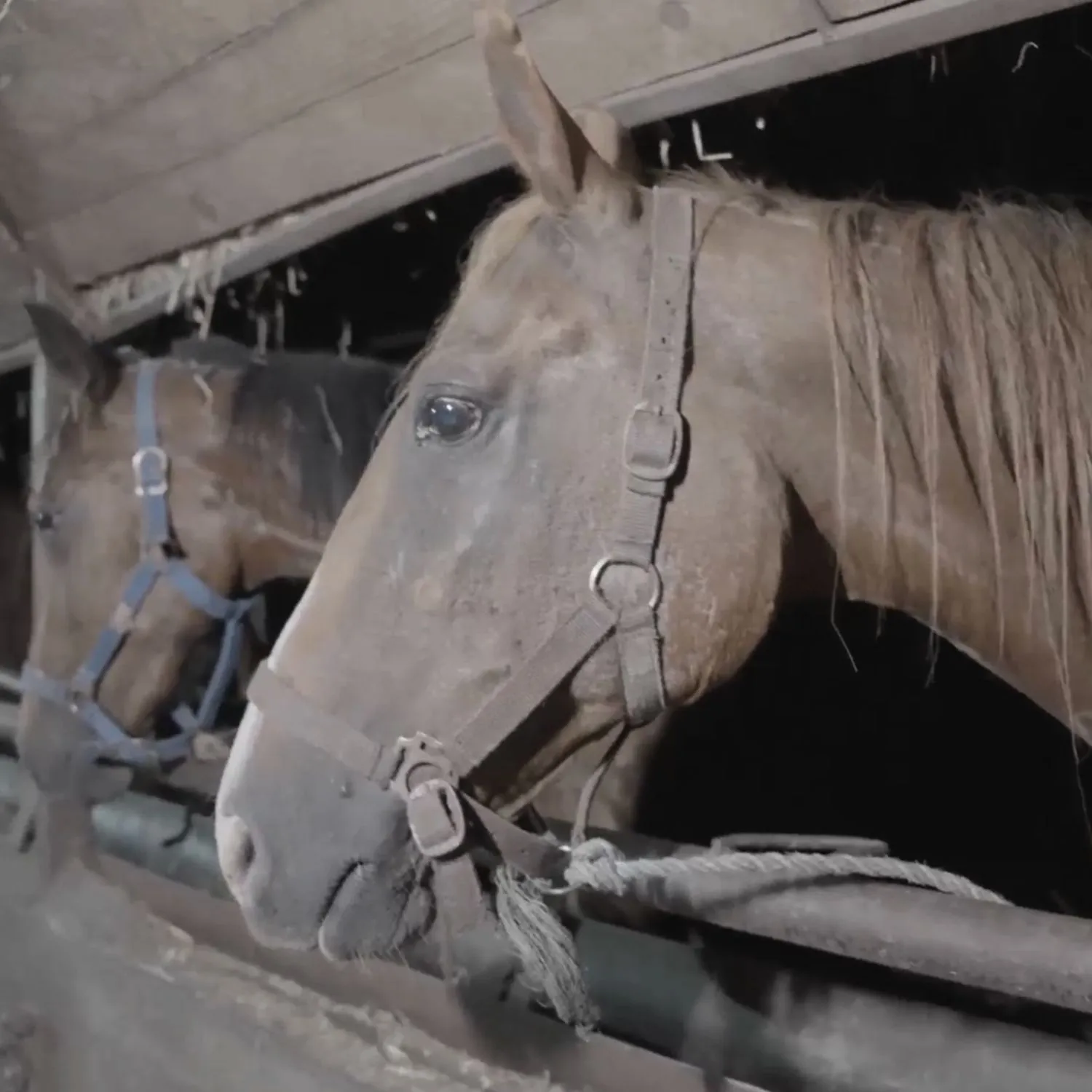
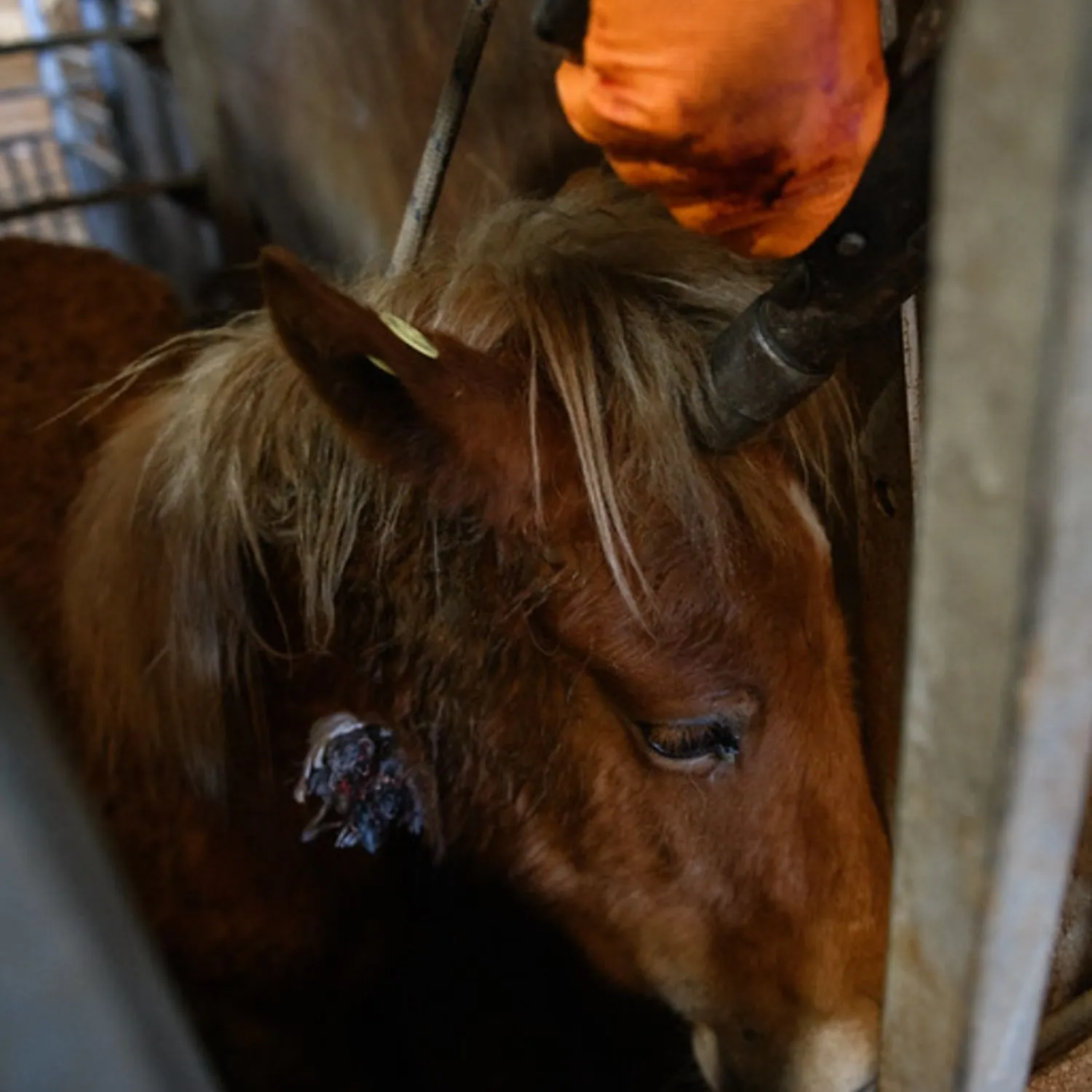
In Italy, our investigation documented beatings, repeated stunning failures, and horses showing signs of consciousness during slaughter. We filed a criminal complaint, while more than 230,000 people backed our Italian campaign.
2024—DOCUMENTING HORSE SLAUGHTER
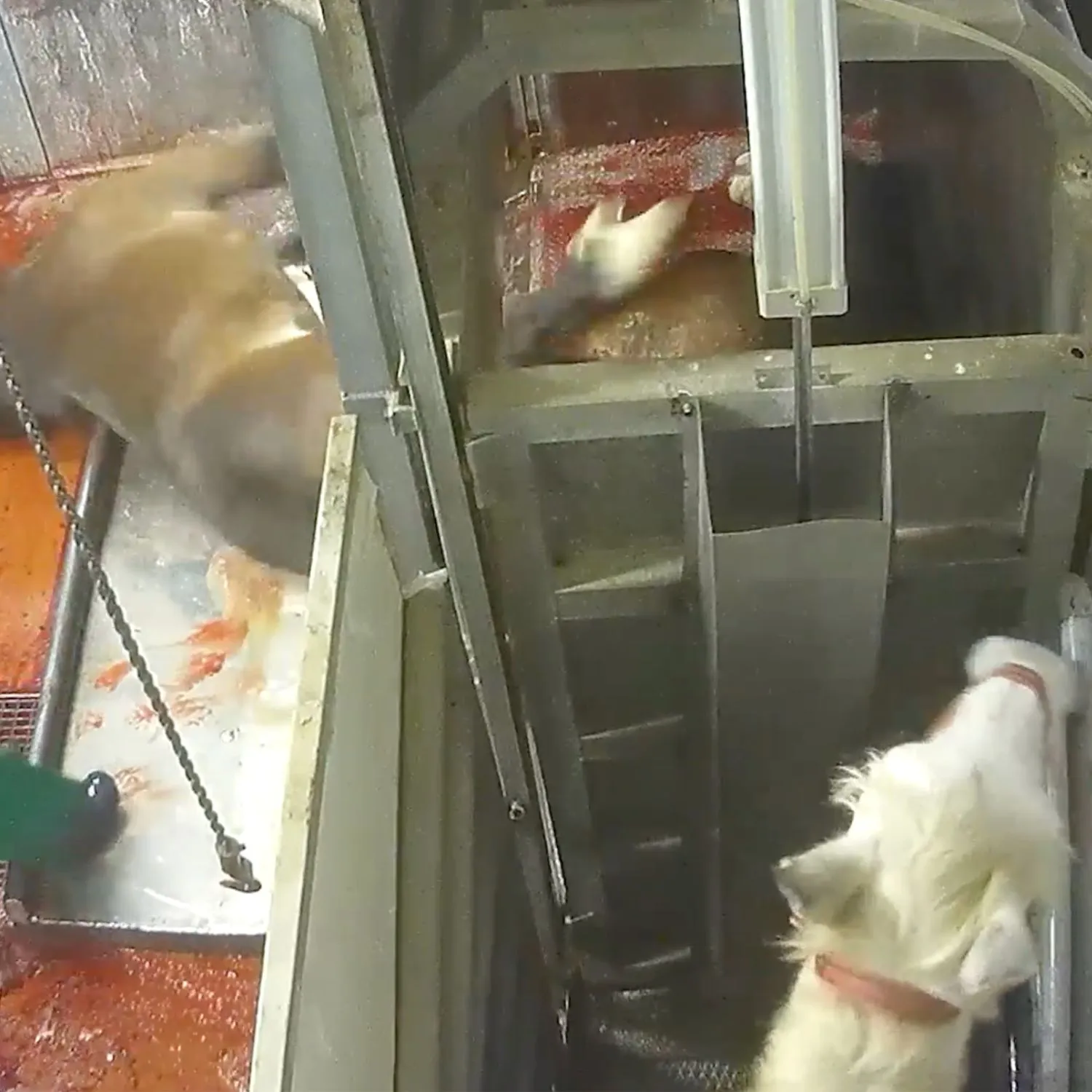
Our investigations in Spain and Italy documented serious welfare failures, including beatings and ineffective stunning. In Spain, we found a system that had changed little since our first investigation there in 2012.
2022—TAKING THE PLEA FOR HORSES IN D.C.
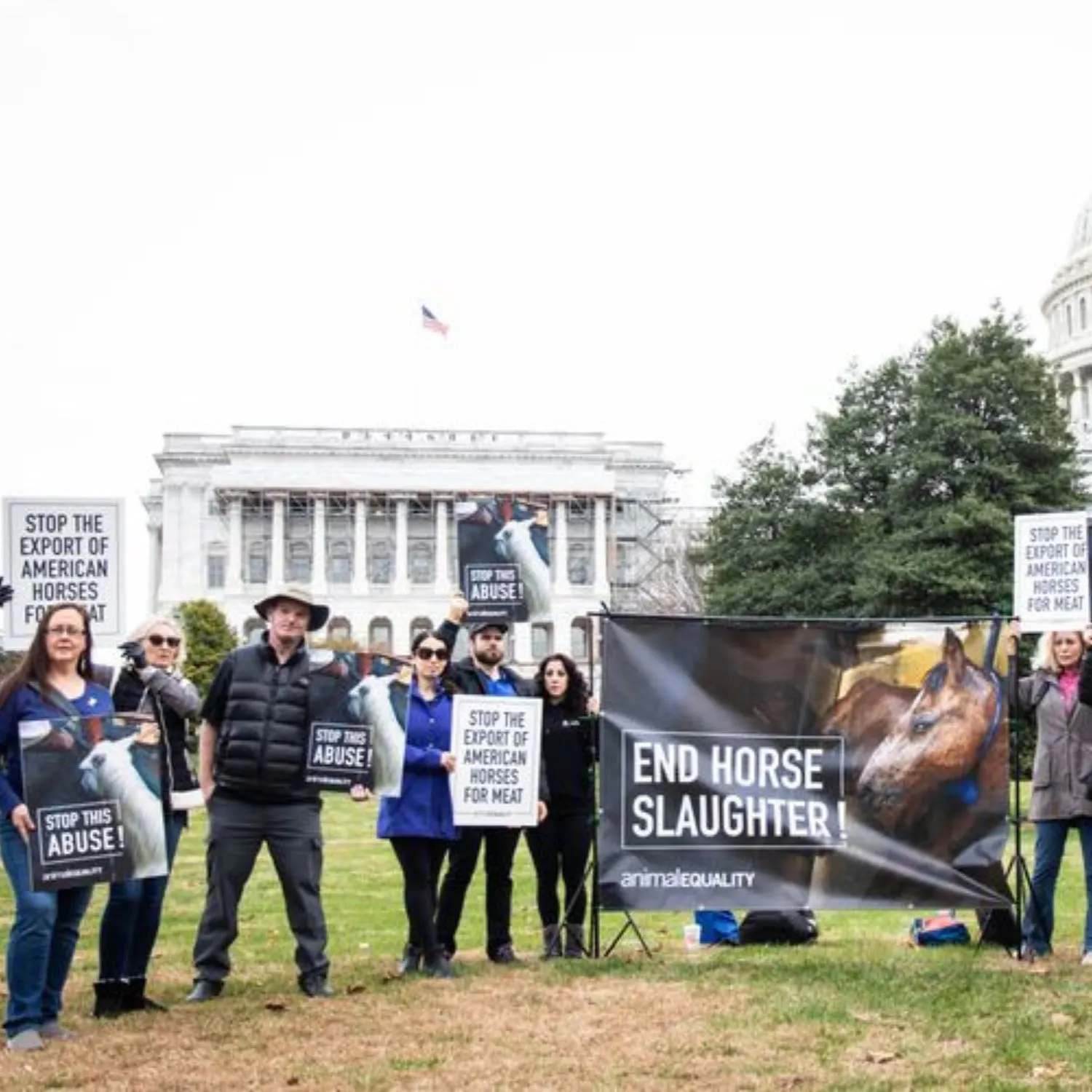
Animal Equality advocates rallied at the US Capitol demanding protection for American horses. Hundreds of thousands signed our petition. We exposed the brutal reality: transport conditions so extreme that some horses die en route; others arrive injured and dehydrated.
2022—EXPOSING THE U.S.- TO-MEXICO PIPELINE
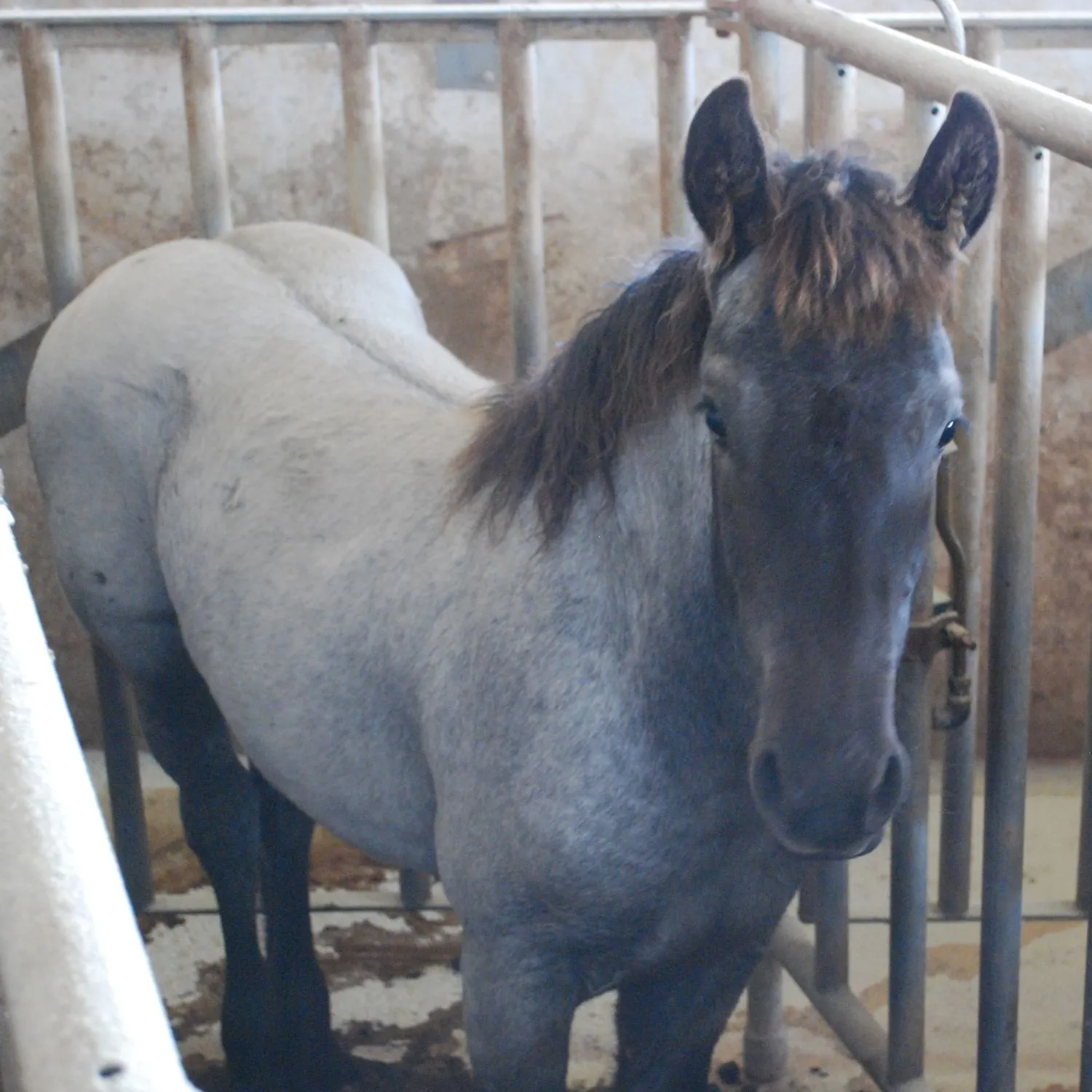
We found American horses bearing USDA identification inside a slaughterhouse in Zacatecas, exposing the direct connection between the U.S. horse industry and international slaughter. We also documented severe cruelty inside Mexican slaughterhouses.
2021—WHERE IT BEGAN
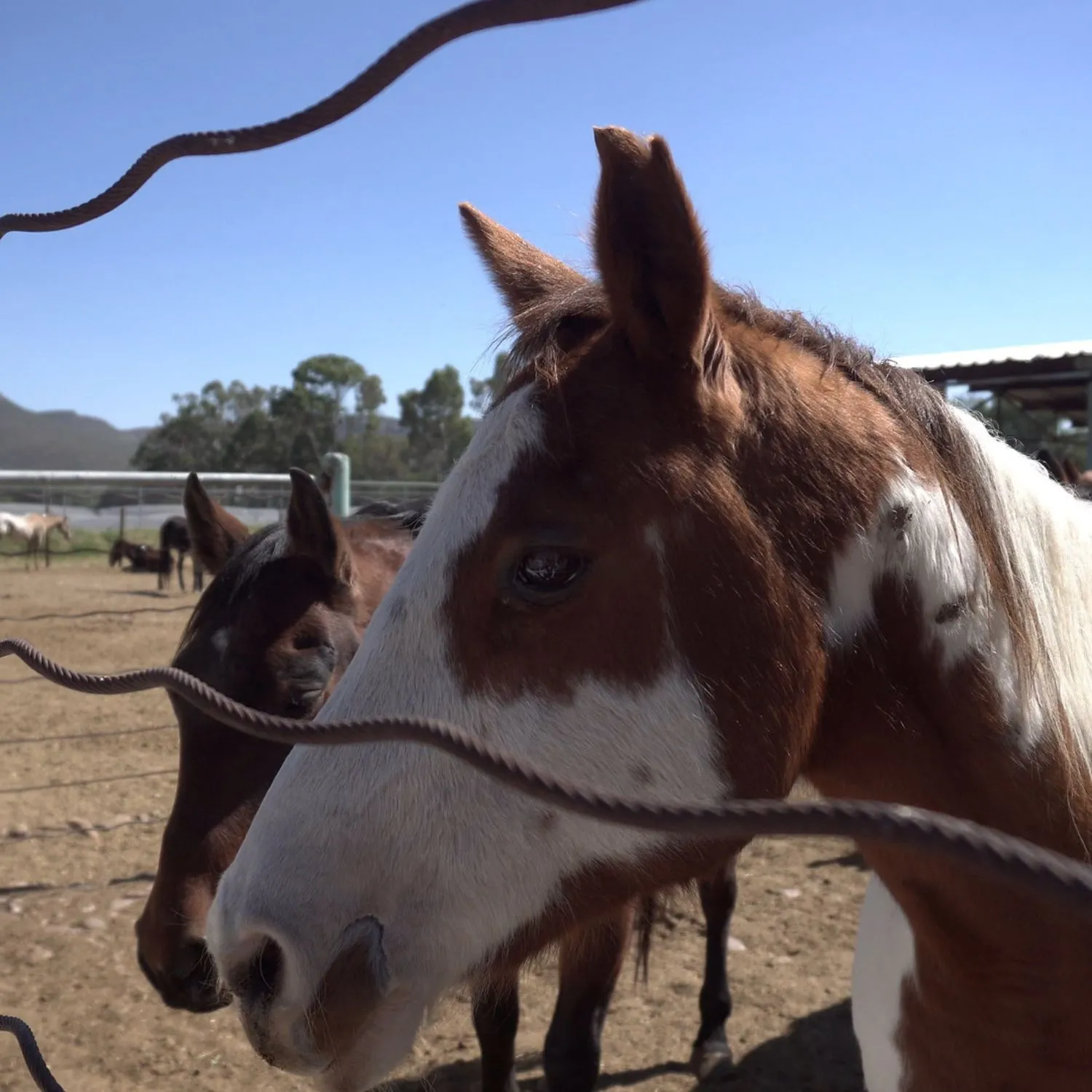
Our first undercover investigation inside a horse slaughterhouse in Spain exposed the suffering horses faced in the slaughter pipeline. The footage generated major national media attention.
Horse meat in the U.S.: FAQ
Horses are admired animals in the United States. It’s difficult to imagine these sensitive animals are killed for their meat. But many people don’t know how the US contributes to meat production from horses.
Below, we are answering your most important questions about horse slaughter.
Is horse slaughter banned in the US?
+There is no permanent federal ban on the slaughter or exportation of American horses. The slaughter of horses in the U.S. occurred as recently as 2007. The practice vanished when Congress removed funding for USDA inspectors to oversee horse slaughterhouses. Only USDA-approved meat can be commercially sold–meaning meat from horses is not currently sold for human consumption in the U.S.
How does the US contribute to horse slaughter?
+Since the 2007 USDA deregulation, the U.S. shifted focus to transporting horses outside the country’s borders. Approximately 24,000 horses are sent to Mexico and Canada yearly to be killed. From 2001 to 2020, the US sent over 1.6 million horses to be slaughtered by these countries.
Is meat from horses sold in the US?
+Though meat from horses is not sold in the U.S., the country ranks among the top 10 producers due to the transportation of horses across its borders for slaughter.
In the U.S., it is not illegal to consume horse meat. However, horse meat cannot be sold in the country. This is because horses cannot be slaughtered for human consumption in the U.S., and the USDA also prohibits the importation of horse meat from other countries.
How are horses transported to other countries?
+On the truck for transport, horses bound for slaughter are crammed into vehicles typically designed for smaller animals. The confined space increases the risk of injuries and no access to food or water. Naturally flight-or-flight animals, some horses begin fighting for dominance while others suffer injuries to escape kicks and bites from more aggressive horses.
Most horses suffer weight loss, fatigue, dehydration and shipping fever–a respiratory disease associated with long-distance transports.
According to a study by the United States Government Accountability (GOA) Office carried out in June 2011, horses are transported an average of 753 miles. The USDA’s Animal and Plant Health Inspection Service (APHIS) and animal protection officials have noted in the study what Animal Equality has witnessed: “Horse welfare is likely to suffer as a consequence of horses traveling significantly farther to slaughter….”
Who eats meat from horses?
+Over 4.3 million horses are consumed by humans around the world every year. Countries in Europe and Asia rank the highest for horse meat consumption–Italy, Belgium, France, China and Japan.
Horses are considered farmed animals, like chickens, cows, and pigs, who are also exploited for their meat. But horses are more commonly acknowledged by the US public as domestic–like the dogs and cats many people live with. While 83% of US citizens oppose the slaughter of horses for their meat,1 most people don’t realize American horses are being killed in Mexico and Canada for human consumption.
1Based on a poll conducted by Lake Research Partners and The American Society for the Prevention of Cruelty to Animals (ASPCA).
Take action for American horses today
Thank you for taking action!
Will you fuel our investigations?
Your donation helps us continue documenting cruelty and turning evidence into law.
Share this campaign with your network
Proof of us horses awaiting slaughter in Mexico
An Animal Equality investigator documented American horses awaiting their killing at a slaughterhouse in Zacatecas, Mexico. The yellow United States Department of Agriculture (USDA) stickers identify the horse’s origin. An on-site veterinarian further confirmed they’re American horses.
In the second part of this investigation, Animal Equality filmed inside a slaughterhouse in Chiapas, Mexico. The images show the cruel treatment of animals inside Mexican slaughterhouses, where American horses can also end up.
At this second slaughterhouse, investigators found severe violations of Mexican Official Standards set to avoid unnecessary suffering.
As the footage shows, workers beat, hang and spray sick and exhausted animals with water in the face to force them to move. Horses are ineffectively stunned—some are shot multiple times in the head before becoming unconscious. Animals are also slaughtered while conscious due to these ineffective stunning methods.
The US Government must protect horses from this fate and ban their transport for slaughter in other countries.
“The death of horse 5036, as well as the death of tens of thousands of American horses every year, is unnecessary and unacceptable. As Animal Equality has documented with this investigation, the US is sending these horses outside of our borders so that their killing is out of sight of the majority of Americans that oppose the slaughter of horses for human consumption. Our citizens agree this suffering is wrong—now it’s time for the US Government to ban it once and for all.“
Sharon Núñez, President of Animal Equality
We have filmed hundreds of stories
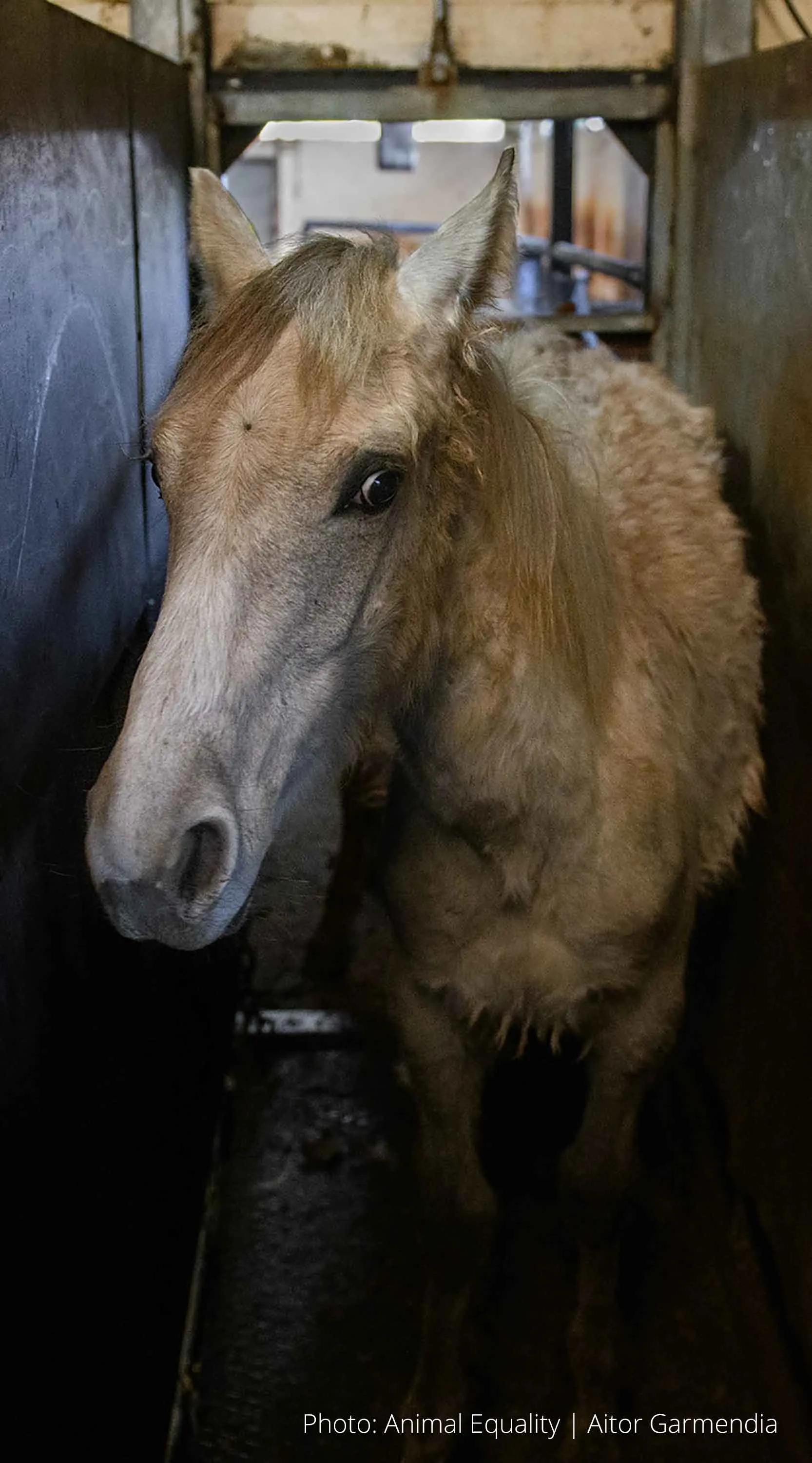
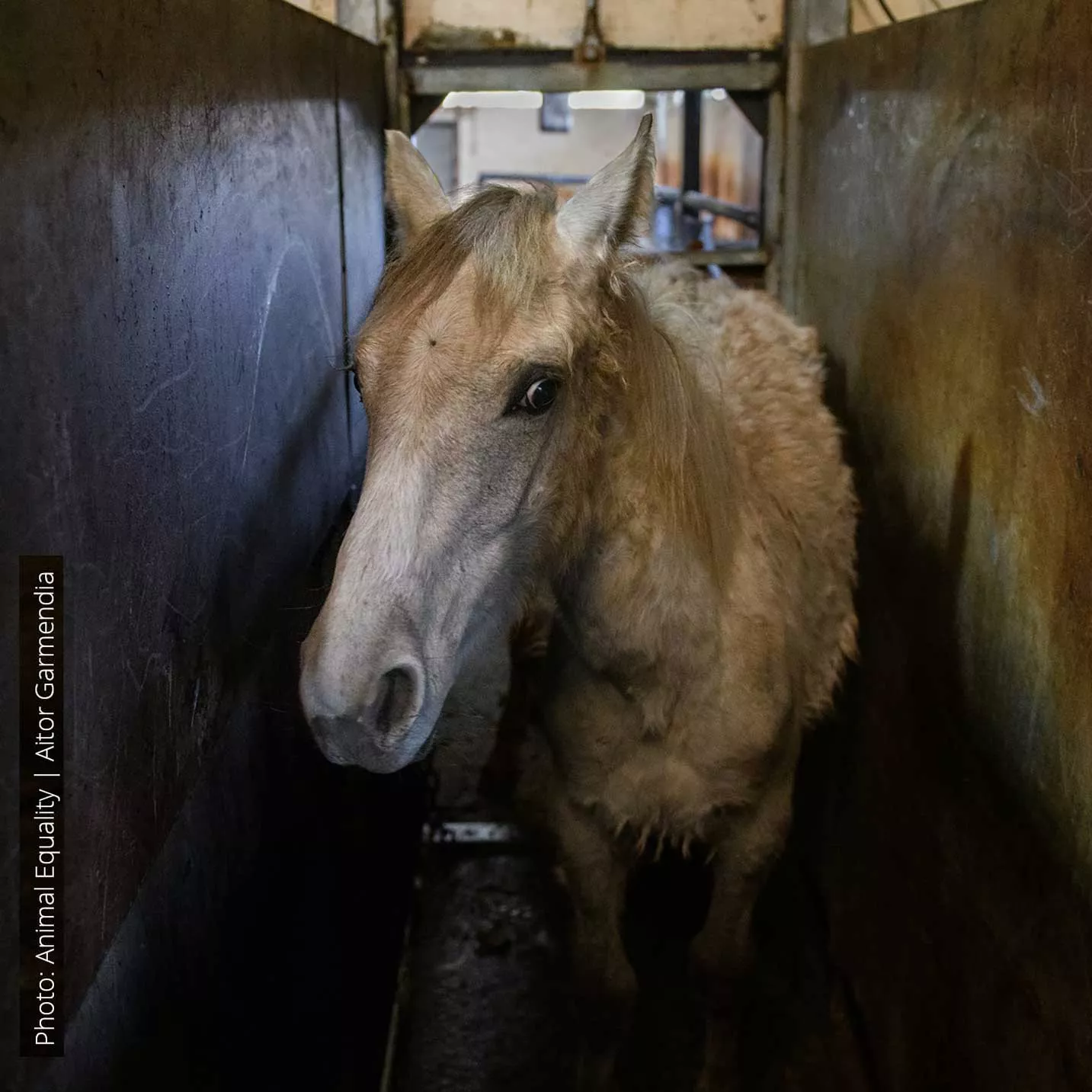
Stories like Fiammetta’s, a young mare found by our investigators in Italy.
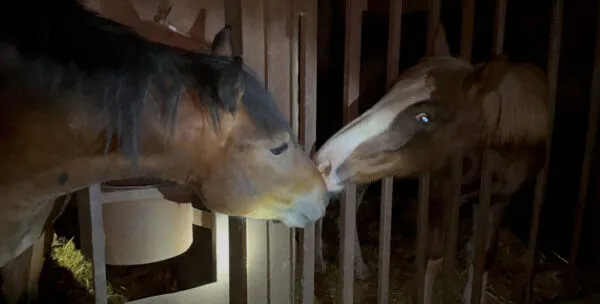
She kept herself tucked against Stella, an older horse she trusted. Stella was her safe place, until the footsteps came. Armed with sticks, slaughterhouse workers beat Fiammetta and Stella into a narrow, metal corridor. They shoved Stella into a small stall. Fiammetta tried to follow, but there was only room for one. A worker brought a heavy metal gate down on Fiammetta. Once. Twice. Three times. Four. The last strike landed on her neck.
Fiammetta stumbled back, separated from Stella. And then she heard it: the thud of a body hitting the floor. Fiammetta let out a frantic whinny. But Stella was gone. When it was Fiammetta’s turn to enter the kill box, a worker hit her in the muzzle to force her head upward.
The captive-bolt gun fired. Fiammetta collapsed to the floor… But she was still conscious, her eyes wide open. The worker saw it and shot her again. More than a minute passed before she bled out, her chest still rising and falling.
This is the global horse meat industry. And this is why we took action.
Animal Equality filed a formal complaint against the workers, the company’s legal representatives, and the officials who failed to oversee this slaughterhouse. We protested outside the local health authority in Italy, demanding accountability. And thousands of people saw our footage on a major Italian news network.
Pressure is rising. The horse meat industry is feeling it. And this is only the beginning.
Support our work to expose and end horse slaughter
Choose compassion today
The same factory farming system that drives horse slaughter—confinement, transport over borders, slaughter for profit—affects billions of other animals. Choosing plant-based meals is one of the most direct ways to reduce animal suffering.